Blue Hole Jamaica Cliff Jumping And Rope Swing: Heights, Rules, Nerves
The Blue Hole near Ocho Rios is the place in Jamaica where cliff jumps and a rope swing from the jungle canopy are the whole point of the visit. Here is what the official site and tour operators actually say about the jumps, the rules, and what to do if your nerve fails at the top.
Short answer
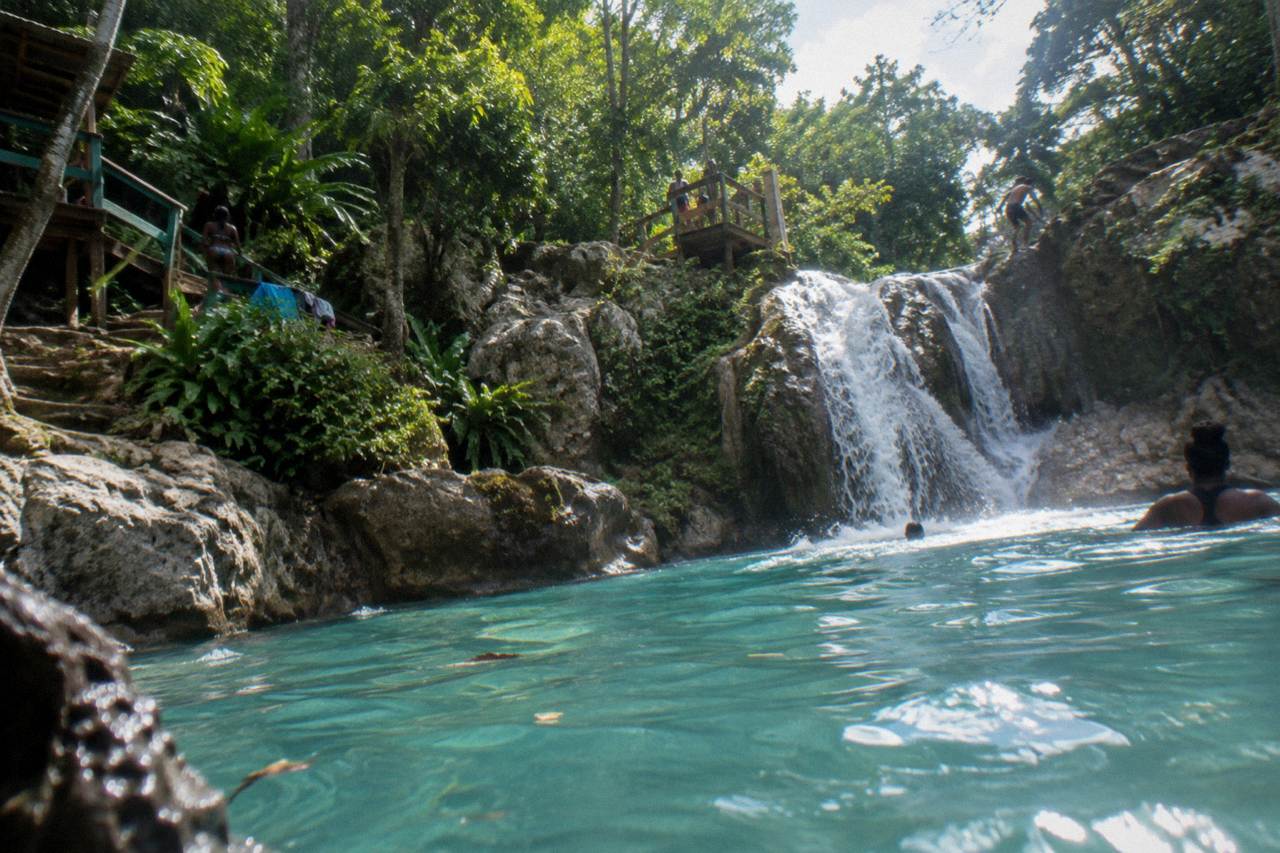
Cliff jumping at the Blue Hole happens only from spots the on-site guides designate, and no jump height is published anywhere official. Guides are trained lifeguards, life jackets are complimentary, water shoes are required, and jumping is optional: trails and lagoon swimming let you skip the jump entirely. The site opens Sunday to Friday, 8:30 AM to 4:30 PM.
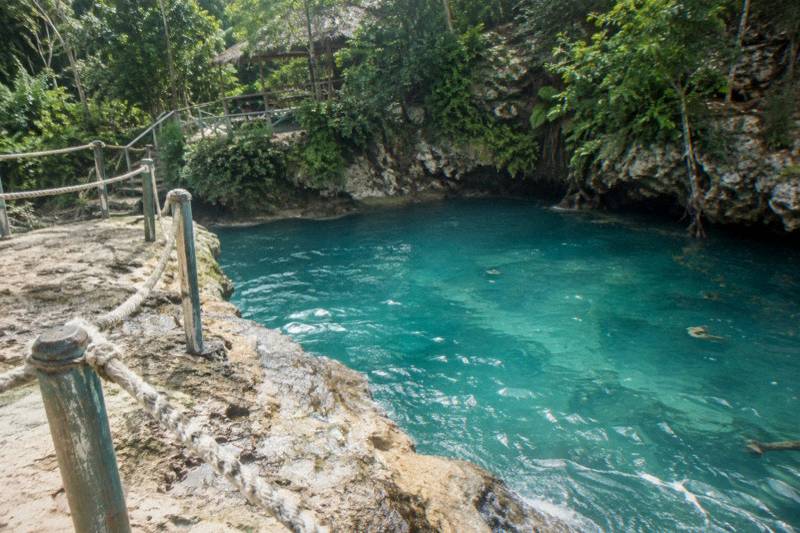
The rope swing at the Blue Hole drops you out of the jungle canopy and into a turquoise pool fed by mountain springs, and the cliff jumps are the reason many visitors book the trip at all. The attraction, officially Island Gully Falls on Thatch Hill Road in St Ann, sits about 20 minutes (8 km) from Ocho Rios town, and it is run by owner-operators who are licensed by the Tourism Product Development Company and featured by the Jamaica Tourist Board. What the official pages publish about the jumps is precise in one way and deliberately quiet in another: the experience is described fully, and no jump height is published at all. That silence is worth respecting, because the number people quote to each other online is usually a guess. The featured Blue Hole Tour from Ocho Rios, from $80 per person with a 4.8 rating from 214 reviews, is the private listing most jumpers pick for a first visit, and this guide covers what you will actually face at the top of the rock. If you want pictures of the drop itself, the Blue Hole photo spots and light guide explains which waterproof gear survives the plunge and which hours give the clearest water.
What Is Cliff Jumping At The Blue Hole Really Like?
Cliff jumping at the Blue Hole means leaping into natural limestone pools and grabbing rope swings that hang from the jungle canopy, with on-site guides showing you exactly where to jump and when to go. Every jump is optional at each stop, so you can watch, wade, or take the plunge on your own terms. The official site describes natural lagoon swimming, cliff jumps, rope swings and forest trails, with guides who lead groups and point out the safe spots. Nothing about the jump is compulsory, and plenty of visitors swim, wade or walk the trails and never leave the ground voluntarily.
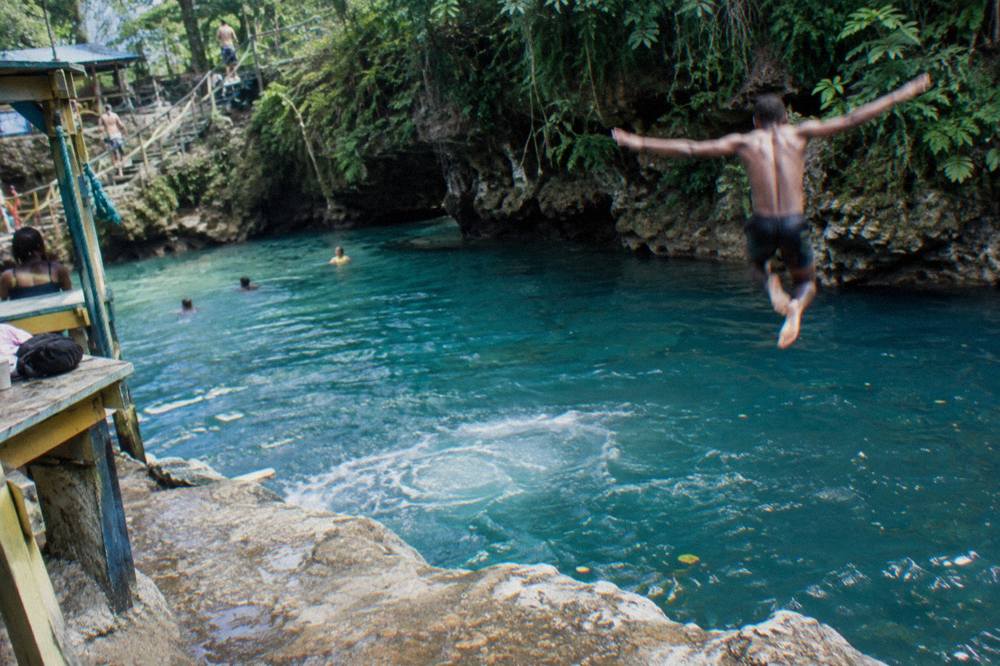
The shape of the experience matters more than any number. The pools are terraced along a river gorge, so a typical guided circuit moves from pool to pool: a lower spot to get wet, a mid-height ledge once you have seen the water up close, and the bigger jumps for anyone still willing. Guides go first, watch the landing area, and call you off if another swimmer is in the way. Guests report that the guides keep the group moving and keep the mood light, which is exactly what you want when your knees are shaking.
The rope swing is a different animal from the jump. You grip a rope hung from the canopy, swing out over the pool, and let go at the point the guide indicates. Timing is everything, and the guides coach it: release too early and you land short, too late and you swing back toward the rock. First-timers almost always get it slightly wrong once, and almost always want a second turn.
What no official source will tell you is how high anything is. Neither official site for the attraction publishes a jump height, and this site will not print a number either, because every figure floating around travel forums is an estimate by someone who stood at the bottom and guessed. What can be said plainly: guides offer jumps at more than one level, guests describe the highest as a genuine thrill, and the lowest as something a hesitant swimmer manages on the first try. If a specific height matters to your decision, ask the guide on the day, then decide with the water in front of you rather than a forum thread behind you. For a closer look at what the attraction and its guides actually publish, plus which tours put a trained guide beside you at the jump, see what the Blue Hole really discloses about its jump height.
What Are The Official Rules For Jumping At The Blue Hole?
The attraction's site states just one official rule, word for word: "Listen to your guide and do not jump from undesignated areas." In practice, that means your guide is the authority on where and how you jump, and any spot outside the designated jumping areas is off limits, no exceptions. Water shoes are required (and sold on site), life jackets are complimentary for on-property use, and guides, who are each trained lifeguards, supervise the jumps. Beyond that single sentence, the official safety guidance is practical rather than legalistic: bring swimwear, a towel, bug spray and sunscreen, a change of clothes, and cash or card.
The designated-area rule is the whole safety system in miniature. The guides know which ledges are usable at today's water level, which landing zones are clear of rock, and where swimmers below might drift. An undesignated spot might look identical from above and be wrong for a reason you cannot see. The rule is why the attraction can offer cliff jumping at all: every jump happens under supervision, at a spot chosen that morning.
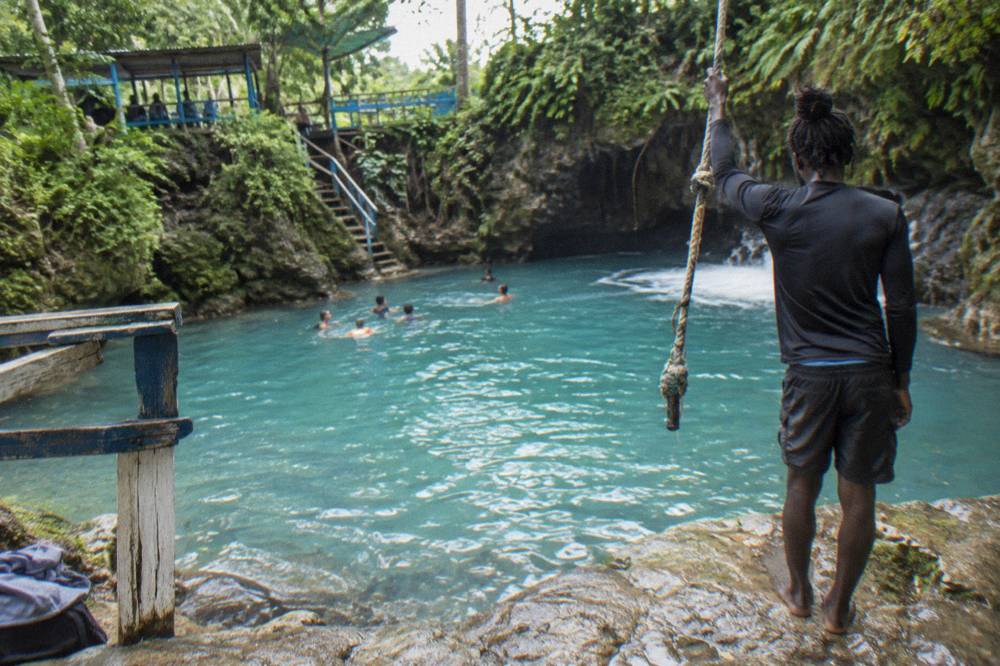
The on-site facilities support the jumping day better than most visitors expect. The official amenities list includes showers, private changing rooms, restrooms, lockers for rent, complimentary life jackets, water shoes in your size for purchase, snack and refreshment bars, a souvenir shop and professional photo packages. That last one matters more than it sounds: someone else holding the camera is the difference between doing the jump and merely remembering it. The full picture of what to pack is covered in the guide to what to wear and bring.
| Rule or facility | Official position | Practical effect |
|---|---|---|
| Jump areas | Designated spots only, guide-led | You never choose a ledge alone |
| Guides | Trained lifeguards, on site | Supervision at every pool |
| Life jackets | Complimentary, on-property use | Wear one for jumping or weak swimming |
| Water shoes | Required, sold on site | Grip on wet limestone |
| Lockers | Available to rent | Valuables stay dry |
| Photos | Professional packages offered | Hands-free jumping |
If you are weighing the risk side of the ledger, the dedicated page on Blue Hole safety, life jackets and guides goes deeper on supervision and what guests report. The short version: the system is guide-led, gear is provided, and the one rule is short enough to memorize.
Do You Have To Jump, Or Can You Walk Down Instead?
No, you do not have to jump. You can walk down instead, and the walk-down route is a genuine alternative: the same gorge offers trails, lower pools, and ladder-and-step access, so a non-jumper still gets into the water, sees the falls, and completes the full circuit. Guests describe groups splitting naturally at the top ledge, with jumpers going off and the rest taking a path down to the same pool. Nobody is pushed, and the guides treat a changed mind as routine rather than defeat.
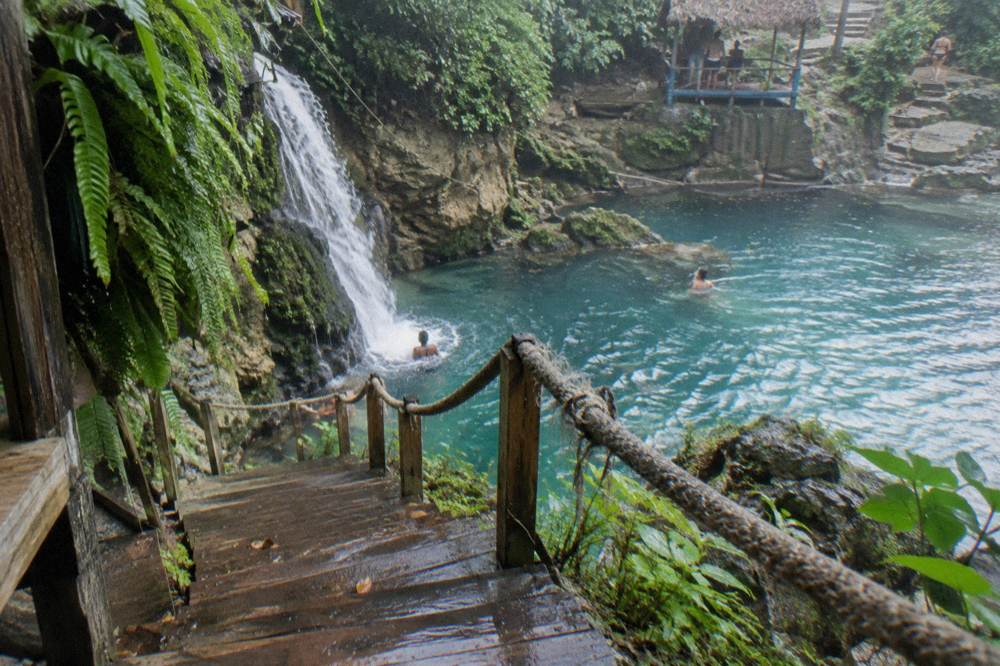
Nerves behave in predictable ways here, and knowing the pattern helps. The first jump is the hardest, not because of the ledge but because of the waiting. Watch the person in front of you, count to three out loud, and step. Guests report that the guide's count is the trick: it converts an open-ended decision into a rhythm. The rope swing, oddly, is easier for many nervous visitors than the jump, because the swing itself carries you and the release feels like a decision you make in motion rather than on the ledge.
For genuinely reluctant swimmers, two honest adjustments make the day work. Wear the life jacket even if you swim well, since it removes the only real fear, the one about surfacing. And start at the lowest designated spot: guides will point to it, and guests say the small win changes the whole day. Non-swimmers are not excluded either, as guides assist visitors in the shallow areas, and life vests are the norm there.
The walk-down choice also suits a mixed group, which is most groups. A listing such as the Blue Hole and Bamboo Rafting tour, 4.9 from 94 reviews and from $100 per person, lets one half of a couple jump all morning while the other rafts and swims, with the same vehicle waiting at the end.
Families weigh the same question with kids in the mix. The gate prices are published, US$25 for a non-resident adult and US$15 for a child 10 and under, and the Blue Hole entrance fee guide covers who pays what. Age minimums for the jumps are not published officially, so the guide on the day judges each child and each ledge; treat that as a feature, not a gap, since a fixed number could never account for water level or a particular kid.
How Do Guides And Life Jackets Keep Jumpers Safe?
Every guide at the Blue Hole is a trained lifeguard, per the official site, life jackets are complimentary, and the jumping happens only at spots the guides have designated that day; the system is supervision-based rather than rule-based. There is no published lifeguard tower or lineup, and none is claimed: the supervision comes from the guides themselves, which is why staying with your group matters more here than at a pool or a beach.
The division of labor is worth understanding. On-site guides, provided with entry or by the attraction, run the jumps, the swings and the pools. Tour guides and drivers, like the one included in the Ocho Rios Blue Hole tour listings, get you there, hold your dry bag, and keep the schedule. Guests report that drivers often secure valuables on the vehicle, which is the recommended practice: leave anything that cannot get wet in the vehicle or a rented locker rather than carrying it to the ledge.
The footwear rule earns its place in the official guidance. Wet limestone is uneven and slick, and the walk between pools is as likely to cause a slip as the jumps are; closed-toe shoes with grip are the standard advice across official and operator sources, and flip-flops are a bad idea from the parking area onward. Water shoes are sold on site if you arrive without them.
Two honest limits complete the picture. Guides may cancel or reroute jumps for safety after rain, when levels rise and the landing zones change; several 2026 guest reviews describe exactly that happening, with the tour rescheduled rather than the rule bent. And the US State Department maintains a standing travel advisory for Jamaica; read the official advisory page itself at travel.state.gov rather than relying on summaries, as this site does not quote its wording. The official attraction pages state the safety guidelines directly at blueholeochi.com and islandgullyfalls.com.
| Layer of protection | Source | What it means on the day |
|---|---|---|
| Designated jump spots only | Official safety guideline | Guided choice of ledge, adjusted to conditions |
| Guides are trained lifeguards | Official site | Supervision in and beside the water |
| Complimentary life jackets | Official amenities list | Available to every visitor, on-property use |
| Water shoes required | Official guideline | Sold on site; grip on wet rock |
| High-water cancellations | Guest reports, 2026 | Jumps paused or tours rescheduled after rain |
What Happens To The Rope Swings And Water After Rain?
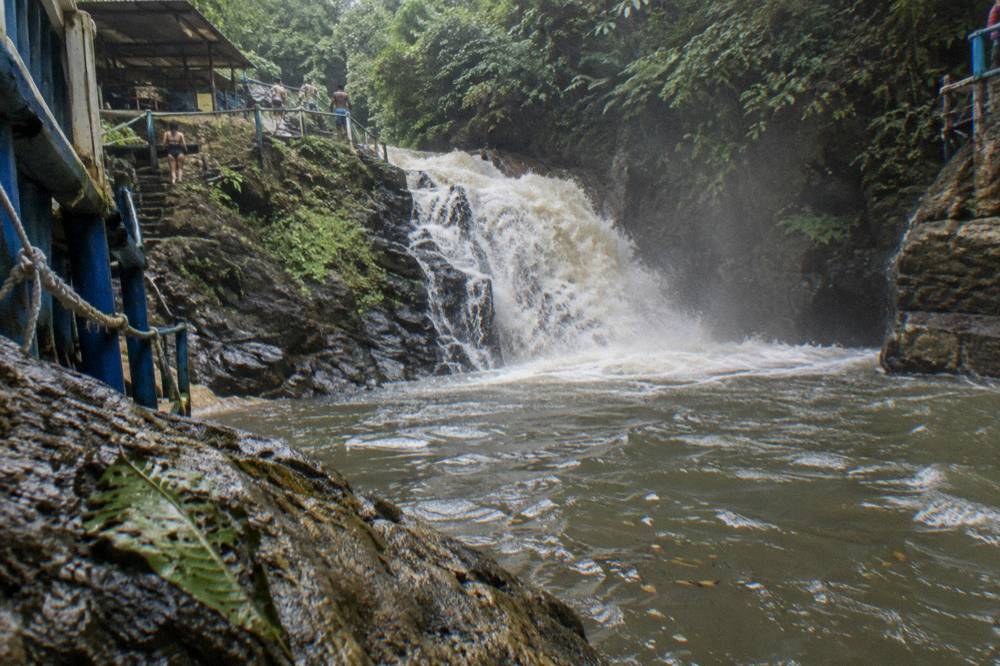
Rain raises the water level, lowers clarity and can close the jumps entirely; operators report that on high-water days the Blue Hole has been closed and tours rescheduled, and dry, sunny weather gives the blue color visitors come for. The swings and jumps are the first things paused when the river rises, because the landing zones and the rope geometry both depend on a stable level. This is not a footnote, it is the single biggest variable in your day.
The seasonal pattern gives you a planning lever. The Ocho Rios area is drier roughly December to April and wetter May to November, with October typically the wettest month. A dry-season morning combines the bluest water, the calmest conditions and the best odds that every jump is open. The full breakdown lives in the guide to the best time to visit the Blue Hole.
Timing within the day matters almost as much as the season. The site opens Sunday to Friday at 8:30 AM and closes at 4:30 PM, and cruise-ship traffic arrives late morning; early arrivals get quieter pools and unhurried guides. Arriving at opening also gives you a buffer: if the level is borderline, the morning guides can tell you quickly and you still have the whole day to adapt. Saturday hours are not published officially, so check before you plan a Saturday visit.
What rain does to the experience is consistent enough to state as a pattern rather than a scare. Higher water means murkier, greener pools and swifter current in the connecting stretches; the jumps close first, then the swings, then sometimes the site itself. Operators report rescheduling rather than refund-dodging, and guests generally describe the process as straightforward. If jumping is the entire point of your trip, build in a fallback day, and choose a listing with free cancellation listed, which on this site's lineup is all of the Blue Hole tours.
| Condition | Effect on the Blue Hole | Who reports it |
|---|---|---|
| Dry, sunny weather | Clearest, bluest water; jumps open | Official site, operator blogs |
| Heavy rain | Level rises, clarity drops | Operator blogs, guest reviews |
| High-water day | Blue Hole closed, tour rescheduled | Guest reviews, 2026 |
| Early morning visit | Quieter pools, relaxed guides | Guest reports, cruise schedules |

Which Tours Include The Blue Hole Jumps And Swings?
Every tour that stops at the Blue Hole includes access to the guides and the jumping circuit, since entry comes with the on-site guide system; what varies between listings is transport, duration, privacy and what else is stacked onto the day. The featured private Blue Hole Tour from Ocho Rios, from $80 per person, 4.8 from 214 reviews, 3 hours, is the cleanest jump-focused option, with hotel pickup in an air-conditioned vehicle and a driver-guide who stays with you.
The combo logic is simple arithmetic. If the jump is your main event, a Blue Hole-only listing maximizes time at the pools. If you are filling one long day from a further base, a combo bundles the jump with Dunn's River Falls, tubing or rafting. The Ocho Rios Blue Hole and Dunn's River Falls Tour, from $89.72 per person and 4.9 from 443 reviews, includes both entry fees and runs 4 to 5 hours; the Triple Action Pack Combo, 4.8 from 772 reviews and from $165 per person, stacks Blue Hole, horseback riding and river tubing into 5 hours with round-trip transport. From Montego Bay, the most reviewed listing on this site's lineup, the Blue Hole and Dunn's River Falls tour from $140 per person at 4.6 from 1,037 reviews, spends 8 hours getting you there, jumping and climbing, with admission tickets and skip-the-line entry included.
Between those poles sit the water-combos. The Irie Blue Hole and River Tubing tour, from $150 per person for 5 hours with all admission fees and port or hotel pickup included, pairs the jumps with a float downriver; as a newer listing its review pool is still small, so judge it by its inclusions rather than a rating. Whatever you choose, read the inclusions line before the price line: some listings include Blue Hole entry, others list it as paid on top at the gate, and that difference is real money on a group booking.
One distinction protects the wrong booking. The jumps and rope swings described here belong to the Ocho Rios Blue Hole, also called Irie Blue Hole or Island Gully Falls, in St Ann. The Blue Hole Mineral Spring in Westmoreland, near Negril, is a different attraction entirely, and no tour on this lineup visits it. If a listing anywhere says Mineral Spring, it is not this jump. For a deeper look at the two names and one place, see the Island Gully Falls guide.
Whether you jump from every designated ledge or walk down every one of them, the day is built around a simple official sentence: listen to your guide. Everything else, the swing, the count, the photos, the second jump you did not plan, follows from that. Blue Hole Tours Jamaica compares the full lineup so you can match the tour to your nerve, your base and your budget.
Common Questions About Blue Hole Cliff Jumping And Rope Swings
How High Is The Jump At Blue Hole Jamaica?
No jump height is published by the attraction's official sites, and this site does not print estimates. Guides offer jumps from more than one designated ledge, and guests describe a range from easy first jumps to a genuine thrill at the top. Ask your guide on the day and decide with the water in front of you.
Do You Have To Jump At The Blue Hole?
No. Jumping is optional at every stop, and the gorge has trails, lower pools and step access so non-jumpers still swim and see the falls. Guests describe groups splitting at the top ledge and reuniting in the same pool below.
Is The Rope Swing At The Blue Hole Safe?
The swing operates under the same system as the jumps: designated spots, guide supervision, and guides who are trained lifeguards. Life jackets are complimentary, water shoes are required, and the official rule is to listen to your guide and jump only where designated.
Can The Jumps Be Closed After Rain?
Yes. Rain raises the water level and lowers clarity, and on high-water days guests report the Blue Hole closing and tours being rescheduled. Dry-season days, roughly December to April, give the bluest water and the best odds that every jump is open.
What Are The Blue Hole Opening Hours?
Sunday to Friday, 8:30 AM to 4:30 PM, per the official sites. Saturday hours are not published, so check before you go if you are planning a weekend visit.
Which Tours Include The Cliff Jumping?
Any tour that stops at the Blue Hole includes the on-site guide system and the jumping circuit. The private Blue Hole Tour from Ocho Rios, from $80 per person, is the focused option; combos add Dunn's River Falls, tubing, rafting or horseback riding.