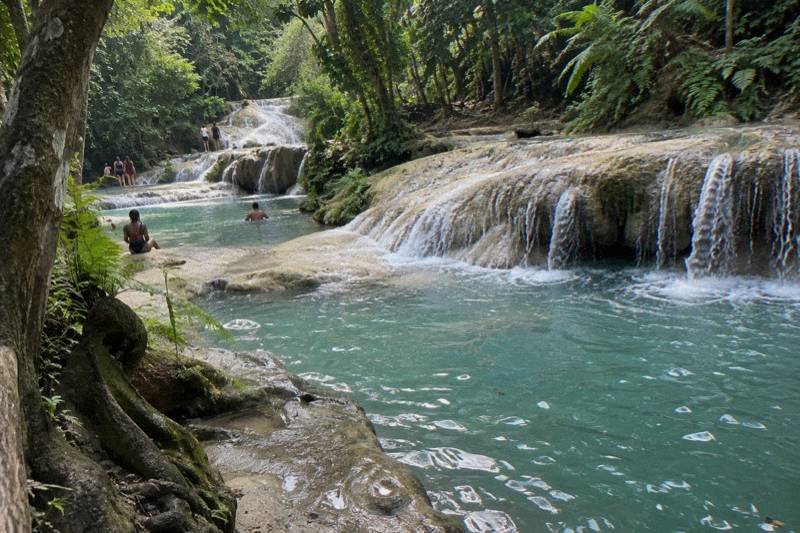
Best Time To Visit The Blue Hole In Jamaica: Month By Month
Dry months give the Blue Hole its brightest colour, but they also bring the cruise-day crowds. Here is how the calendar, the rainfall and the clock change a visit to Island Gully Falls.
Short answer
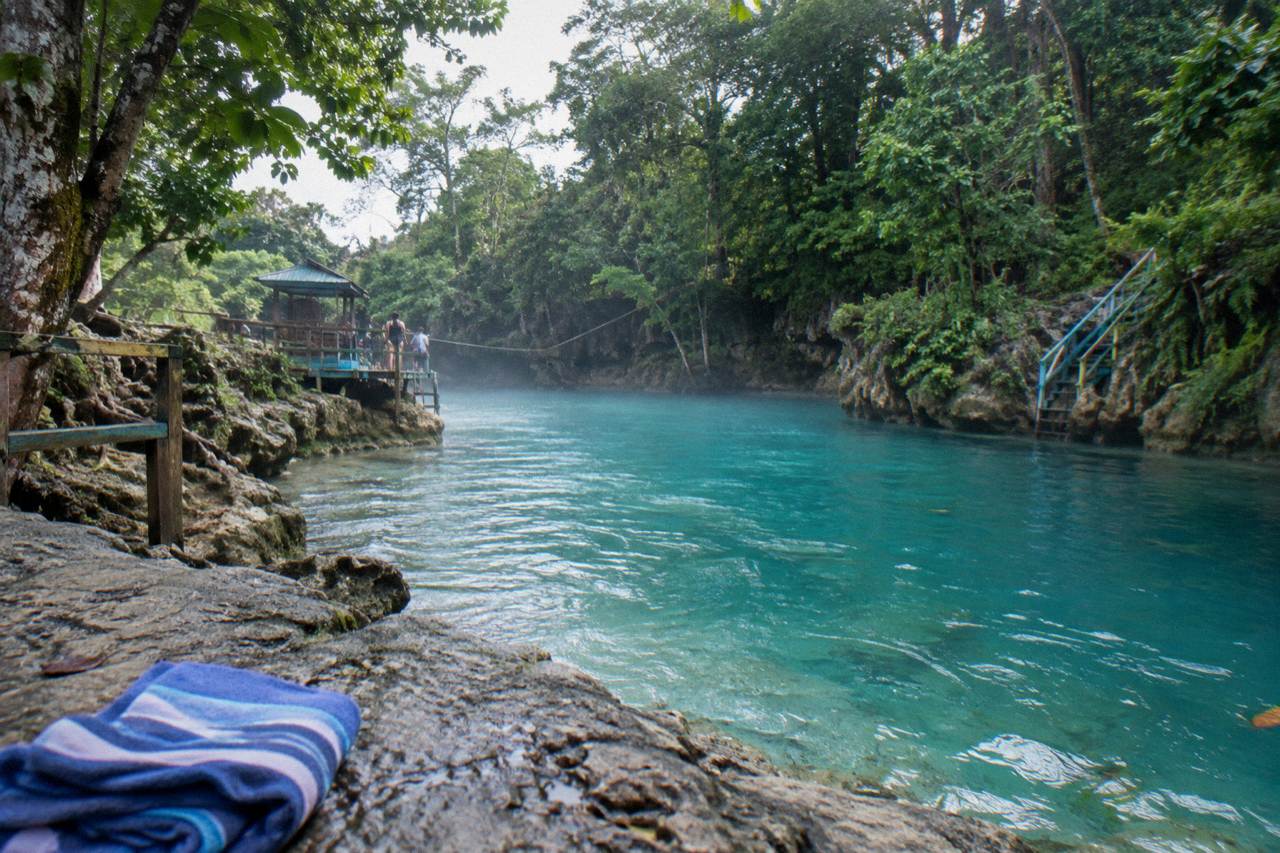
The best time to visit the Blue Hole in Jamaica is roughly December to April, the drier stretch of the year, when rainfall is lowest and the water runs its clearest turquoise. Go on a weekday morning near the 8:30 AM opening to dodge cruise crowds. The site is open Sunday to Friday, 8:30 AM to 4:30 PM.
Few decisions shape a Blue Hole visit more than the calendar. Rainfall moves the water level, mutes the famous blue, and on some days closes the attraction outright, while dry-season sunshine draws cruise ships and coach tours to the same lagoon. We compared the official hours, the climate record and the tour listings to lay out what each stretch of the year actually delivers at Island Gully Falls near Ocho Rios. Once you have a month in mind, our honest verdict on whether the Blue Hole in Jamaica is worth it weighs the cost against what the experience actually delivers.
The headline answer is simple: roughly December to April is the drier window, and May to November is wetter. But the honest version is more useful, because the Blue Hole is a living river system rather than a swimming pool, and the month you choose changes the colour, the crowds and the odds of a high-water closure. The Blue Hole Tours Jamaica lineup covers every season, from the 3-hour Blue Hole only trips out of Ocho Rios to full-day combinations from Montego Bay, so the timing question and the tour question are worth answering together.
What Is The Best Time To Visit The Blue Hole In Jamaica?
The best time to visit the Blue Hole in Jamaica is the dry stretch from roughly December to April, when rainfall is lowest, the water is at its clearest turquoise, and the falls stay open most days. Within that window, a weekday morning close to the 8:30 AM opening gives you calm water and thinner crowds before the tour buses arrive.
The dry season consensus comes from the climate data for Ocho Rios: the winter months sit at the bottom of the rainfall chart while October sits at the top. Temperatures barely matter to the choice, since daytime highs only drift between about 29 and 32 degrees Celsius all year. What actually changes month to month is rain, and rain is the single variable that decides whether the Blue Hole looks like the postcard.
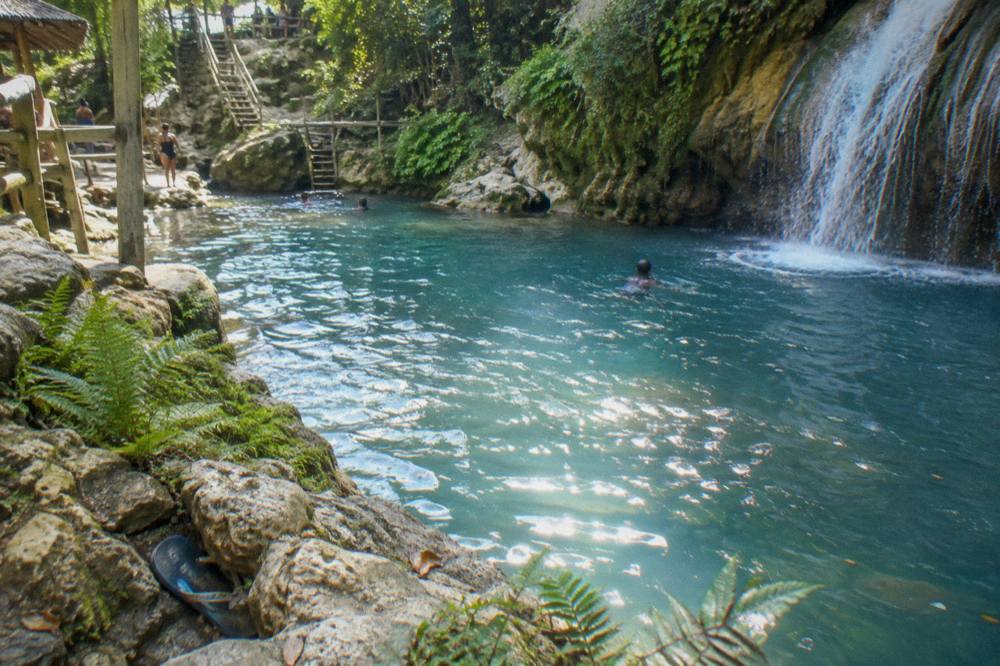
There is a trade-off, and it is worth naming plainly. Dry months mean clear water, and clear water means everybody else wants the same photograph. February, one of the driest months on record for the area, is also deep in peak tourist season, so the lagoon fills early. Wet-season visitors get quieter paths, greener jungle and softer prices on some departures, but they accept a real chance of brown, high, swimmable-but-murky water. Neither answer is wrong; it depends what you are buying.
The gate itself does not change with the seasons: the official entry fee is US$25 for non-resident adults and US$15 for children 10 and under, as covered in the Blue Hole Jamaica entrance fee guide. Operators such as the 4.5-rated From Ocho Rios Blue Hole Secret Waterfall and Highlights tour, from $60 per person with entry included, run the same route in every month; only the water and the crowd density move.
How Does Rain Change The Blue Hole's Water Colour?
Rain changes the Blue Hole by raising the water level and cutting clarity: heavy rainfall washes sediment and runoff into the limestone pools, turning the vivid blue a greener or murkier shade, while dry, sunny spells let the water settle into its brightest turquoise. Reviews from high-water days describe closures and rescheduled tours.
The mechanism is not mysterious. The Blue Hole sits on a mountain-fed river at the end of Thatch Hill Road in St Ann, and when rain falls hard upstream, the level rises and the fine sediment stays suspended. Operators and travel writers report the same pattern from both sides of the year: the dry, sunny stretch gives the colour the site is famous for, and a wet week can hide it entirely. Guests on combo tours have reviewed days when the Blue Hole was closed on high water and the itinerary flipped to another stop.
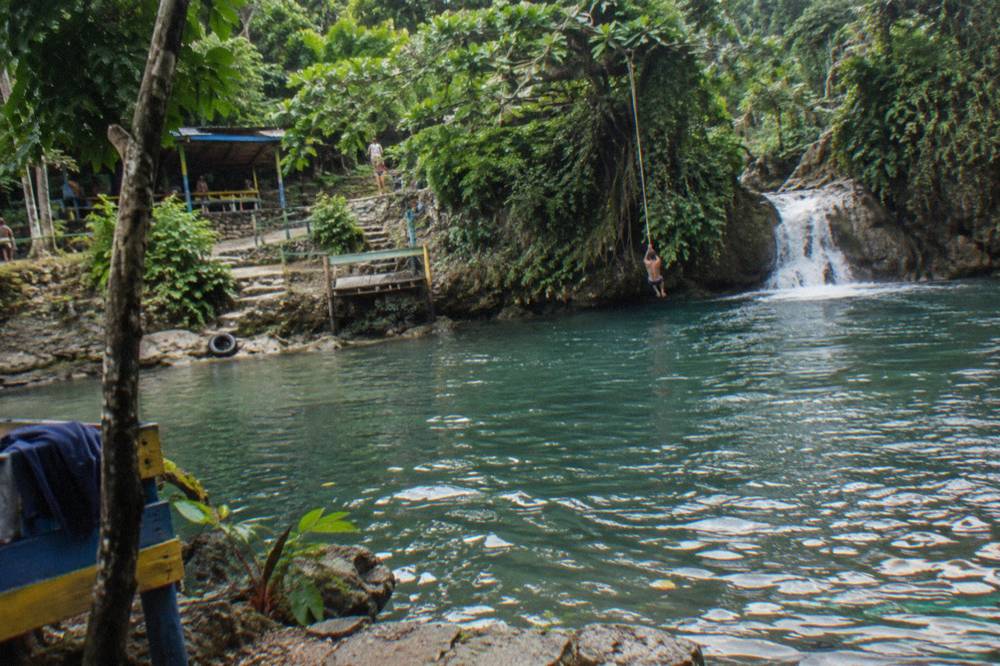
This is why the closure risk deserves a paragraph of honesty rather than a footnote. No operator can promise the water level or the colour on your date; the rule on this site and on the ground is that guides judge conditions on the day. The pragmatic fix is booking a trip that bundles the Blue Hole with a second stop, so a high-water closure costs you one swim rather than the whole day. The most reviewed listing here, the Montego Bay Blue Hole and Dunn's River Falls trip (4.6 from 1,037 reviews, from $140 per person), pairs the two falls with a jerk-chicken lunch stop, which is exactly the resilience a wet-season planner wants. The Ocho Rios Blue Hole and Dunn's River Falls tour (4.9 from 443 reviews, from $89.72 per person) does the same job on a shorter, 4-to-5-hour schedule for visitors already on the north coast. And if you are still weighing whether the whole outing justifies its price tag, our honest verdict on whether the Blue Hole is worth it walks through the costs, the crowds, and exactly who the trip suits.
If clear water is the whole point of your trip, bias your dates toward the dry months and keep one backup day free. If you are cruising in the wet season, book a combo rather than a Blue Hole-only shore excursion, and read the listing's own description of what happens when the site closes.
Which Months Are Wettest And Driest Around Ocho Rios?
Around Ocho Rios, roughly December to April is the drier stretch, with February among the driest months at roughly 53 to 69 mm of rain, while October is typically the wettest at around 156 to 166 mm. May to November is the wetter half of the year, with rainy days climbing from about 6 per month in February to about 16 in October.
The numbers come from the climate record for Ocho Rios, and they are planning ranges rather than forecasts: any single month can overshoot or undershoot them. What they show clearly is a modest dry season rather than a desert one. Jamaica's north coast gets rain in every month of the year; the difference between February and October is one of degree, roughly a third of the rainfall against the peak, and the difference in water clarity follows it.
| Period | Rainfall character | Rainy days (approx.) | What it means at the Blue Hole |
|---|---|---|---|
| December to April | Drier stretch; February driest at about 53 to 69 mm | about 6 in February | Clearest, bluest water; peak crowds, highest cruise traffic |
| May to July | Wet season builds; lower hurricane risk than late season | moderate | Green jungle, variable clarity, quieter pools |
| August to October | Statistical hurricane peak; October often wettest at about 156 to 166 mm | about 16 in October | Real closure risk on high-water days; fewest crowds |
| November | Rains ease; roughly 110 mm or more in some records | moderate | Shoulder conditions: recovering clarity, thinning crowds |
Temperature, for the record, refuses to be a deciding factor. Daytime highs in Ocho Rios run about 29 degrees Celsius in the winter months and about 32 in July and August, a range too narrow to build a trip around. Pack for warm weather whenever you come; choose your month for rain and crowds instead.

A practical note on the wet-season upside: the same rain that muddies the pools feeds the rope swings, the cascades and the jungle canopy, and several of the site's cliff jumping and rope swing features are at their most dramatic when the river has volume. Wet-season visitors who accept murkier water often get the more powerful waterfall.
Does Hurricane Season Change The Plan?
Yes: the Atlantic hurricane season runs June 1 to November 30, with the statistical peak around August to October, and that window overlaps the wettest months at the Blue Hole. Storms rarely close the north coast for long, but heavy rain days bring high-water closures, so travelers in this stretch should keep schedule flexibility and choose tours with free cancellation.
The most recent evidence is reassuring on the whole. Hurricane Melissa closed Dunn's River Falls in October 2025 and it reopened on November 11, 2025 after safety checks, and the Blue Hole's own official pages carried no closure notice through that period. Resort areas around Ocho Rios, Montego Bay and Negril were reported open and recovering through 2026, with hotel capacity projected back toward 71 to 88 percent by December 2026. The region takes hits and reopens quickly; the Blue Hole's own risk on any given day is river level, not storms.
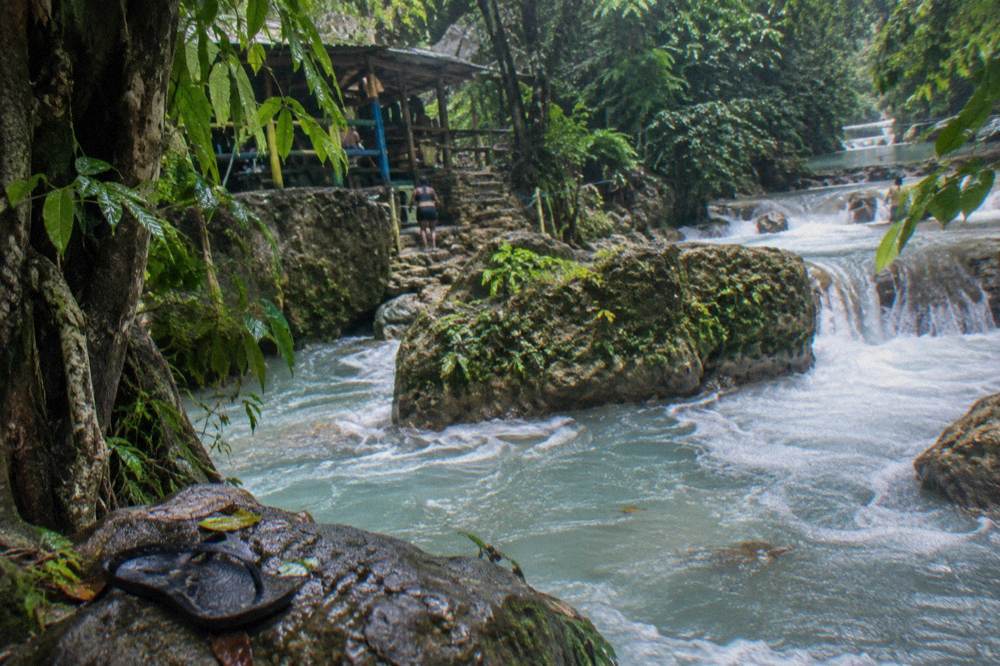
For practical purposes, that means three things if you travel between June and November. Book a listing with free cancellation, which every tour on this lineup carries, so a rescheduled port day or a washed-out morning costs you nothing. Prefer combos over single-stop trips, since an itinerary with a second anchor bends instead of breaking. And give yourself a spare day in the itinerary if the Blue Hole is the reason for the trip, because a high-water closure is a same-week event, not a same-season one.
Do Cruise Ship Days Change The Crowds At The Blue Hole?
Cruise ship days concentrate crowds: sources for the Ocho Rios area report the heaviest pressure around the falls on cruise days, often Mondays and Tuesdays, and in the December to April peak season. On non-cruise days, Wednesdays to Fridays and weekends, the Blue Hole runs noticeably quieter, especially outside the dry-season rush.
The mechanics are blunt. Ocho Rios is a three-pier port town, and on port days thousands of passengers pour into the same handful of marquee attractions, Dunn's River Falls first and the Blue Hole second. Tour operators time their departures around ship arrivals, which is why an early-morning start matters so much: the lagoon at 9 AM and the lagoon at noon on a port day are two different experiences, one calm and one queueing for the rope swing.
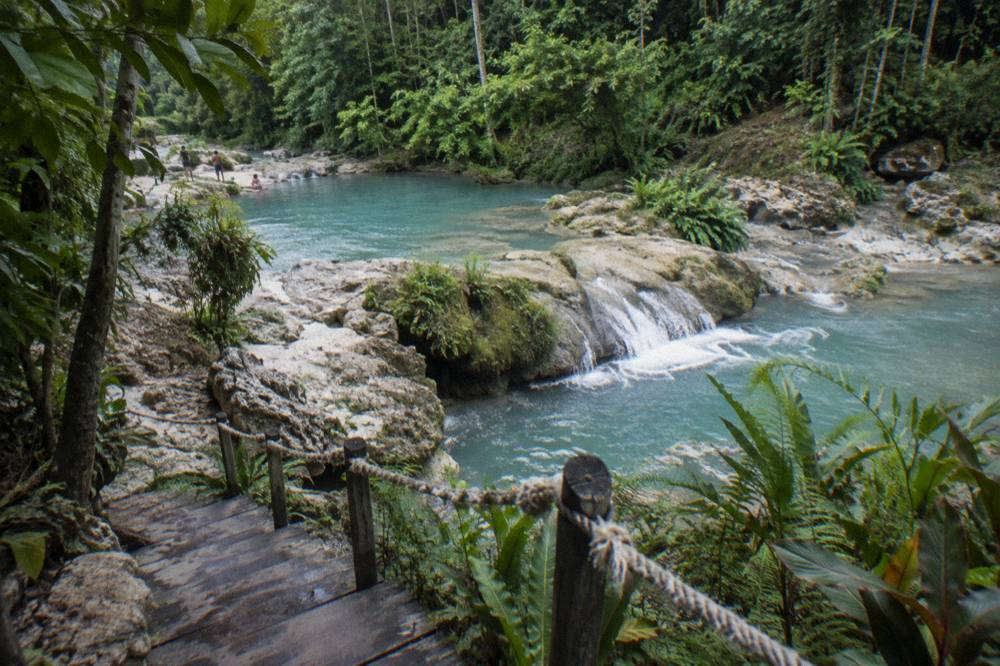
Cruise passengers have less freedom than hotel guests, since the ship sets the clock, but the principle still holds: pick the earliest departure your port schedule allows. The Blue Hole Jamaica cruise excursion guide breaks down the options by port, and the Triple Action Pack Combo (4.8 from 772 reviews, from $165 per person), which adds horseback riding and river tubing to the Blue Hole, is built for exactly the port-day crowd, with pickup 30 minutes after the ship docks. Hotel-based travelers should simply invert the logic: any weekday outside a port arrival is your friend.
The quietest realistic combination is a Wednesday or Thursday in the wetter half of the year, first thing in the morning. You trade some water clarity for near-solo access to pools that, in February at midday, hold a coach tour's worth of guests.
What Is The Best Time Of Day To Visit The Blue Hole?
The best time of day at the Blue Hole is the first hour after opening: the site opens Sunday to Friday at 8:30 AM and closes at 4:30 PM, and the early window gives you clear morning light, cooler air and the pools before tour groups arrive. After 2 PM is the second-best slot, as crowds drain away.
The official hours come from the attraction's own page, which lists Sunday to Friday, 8:30 AM to 4:30 PM, with no published Saturday hours, so check before you go. The morning recommendation is not just about crowds. Guest reports and photography notes agree that the water reads bluest under midday sun, so the sweet spot is arriving at opening, swimming in relative calm for the first couple of hours, and letting the strongest light arrive while you are already in the water rather than in a queue.
| Time of day | Crowd level | Light and water | Notes |
|---|---|---|---|
| 8:30 to 10:30 AM | Lowest of the day | Soft light, settled water | Best overall slot; beat the coaches |
| 10:30 AM to 1 PM | Building to peak | Strongest sun, bluest colour | Peak port-day window |
| 1 to 2:30 PM | High on port days | Full sun | Lunch crowds at snack bars |
| After 2:30 PM | Falling | Angled light | Quieter, but the 4:30 PM close limits swim time |
Two logistics points finish the picture. The drive from Ocho Rios town is about 20 minutes (8 km), so a hotel guest can realistically be at the gate for opening. From Montego Bay the official figure is about 2 hours 11 minutes (111 km), which is why the Montego Bay itineraries, such as the featured Blue Hole and Dunn's River Falls day trip, run about 8 hours and leave early; the Blue Hole tour from Montego Bay guide covers those schedules in detail. And on any day, bring what the official guidelines ask for: water shoes, swimwear, a towel and cash or card, as covered in what to wear and bring.
Which Blue Hole Tour Fits Which Season?
Dry-season travelers should book early-departure combos that beat the crowds, wet-season travelers should book multi-stop itineraries with free cancellation that survive a high-water closure, and everyone should match the tour's duration to their departure point: about 3 hours from Ocho Rios, 5 to 8 hours from Falmouth or Montego Bay, and a full-day commitment from Negril or Runaway Bay.
The lineup splits cleanly along those lines, and the season only changes which column you read first. From Ocho Rios, the Blue Hole only listings run 2.5 to 3 hours, including a private 3-hour trip rated 5.0 from 213 reviews, from $40 per person plus entry. These short trips are the dry-season crowd-dodgers: leave at 8:30 AM and you are swimming before the first coach unloads. The full price picture for visiting, gate fee included, is laid out in how much it costs to go to the Blue Hole.
| Trip type | Example from the lineup | Season it suits |
|---|---|---|
| Blue Hole only, Ocho Rios, 2.5 to 3 hours | From $60 per person, 4.5 from 28 reviews, entry included | Dry season, early start, crowd-dodging |
| Blue Hole plus Dunn's River, Ocho Rios, 4 to 5 hours | From $89.72 per person, 4.9 from 443 reviews | Any season; the standard hedge |
| Blue Hole plus Dunn's River, Montego Bay, 8 hours | From $140 per person, 4.6 from 1,037 reviews | Wet season resilience; two anchors plus lunch stop |
| Blue Hole plus rafting, Ocho Rios, 3 to 4 hours | From $95 per person, 4.9 from 214 reviews | Wet season; the raft runs rain or shine |
| Triple combo with horseback and tubing, 5 hours | From $165 per person, 4.8 from 772 reviews | Port days and families in any month |
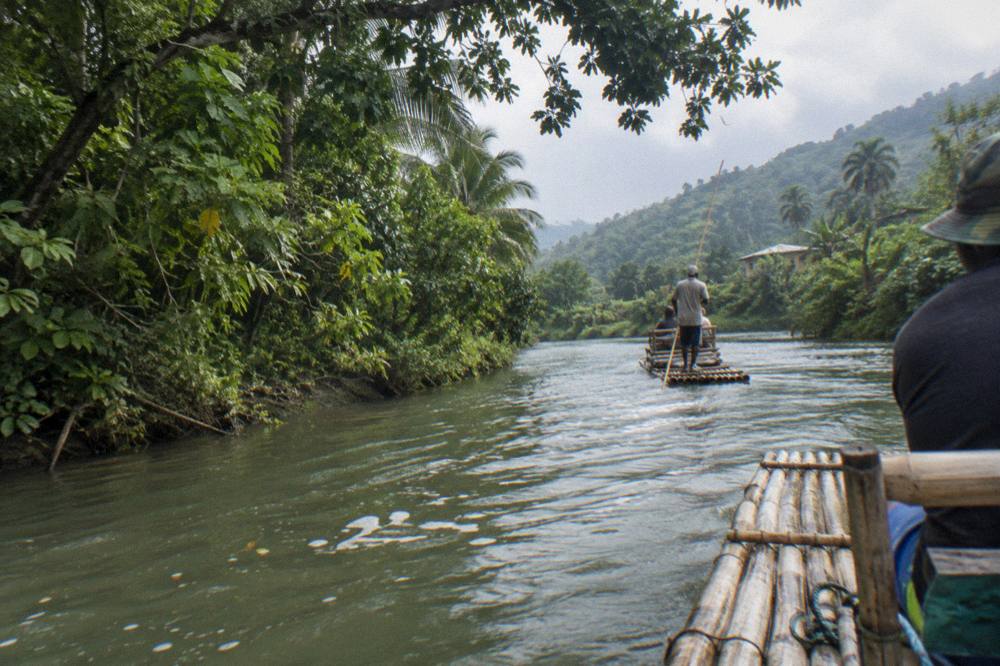
The wet-season logic deserves the last word on booking. Bamboo rafting pairs naturally with the Blue Hole precisely because the river sections that make the falls murky are the ones that make a raft ride fun, and the Blue Hole and Bamboo Rafting trip (4.9 from 214 reviews, from $95 per person, all fees included) treats rain as fuel rather than a problem. Whatever you choose, the whole lineup carries free cancellation, so the calendar decision you are really making is about which day to aim for, not whether you can change your mind.
Common Questions About The Best Time To Visit The Blue Hole
What Is The Best Time To Visit The Blue Hole In Jamaica?
Roughly December to April, the drier stretch around Ocho Rios, when rainfall is lowest and the water is clearest. Within any month, arrive close to the 8:30 AM opening on a weekday to avoid the cruise-day crowds.
Does Rain Close The Blue Hole?
It can. Rain raises the water level and lowers clarity, and guest reviews report the Blue Hole closed on high-water days with tours rescheduled. Operators judge conditions on the day, so no closure or reopening can be promised in advance.
What Are The Blue Hole's Opening Hours?
The official hours are Sunday to Friday, 8:30 AM to 4:30 PM. No Saturday hours are published on the official site, so treat the site as open most days and check before you go.
When Is Hurricane Season In Jamaica?
The Atlantic hurricane season runs June 1 to November 30, with the statistical peak around August to October. The north coast reopens quickly after storms, and the Blue Hole's bigger day-to-day risk is river level rather than storms.
What Is The Best Time Of Day To Swim At The Blue Hole?
The first hour or two after the 8:30 AM opening: calm pools, cooler air and thinner crowds. After 2:30 PM is the second-best window as tour groups leave, though the 4:30 PM close limits swim time.
Is The Blue Hole Crowded In The Dry Season?
Yes, it can be. December to April is both the clearest-water window and peak tourist season, with cruise days, often Mondays and Tuesdays, the busiest. Early weekday mornings are the workaround.