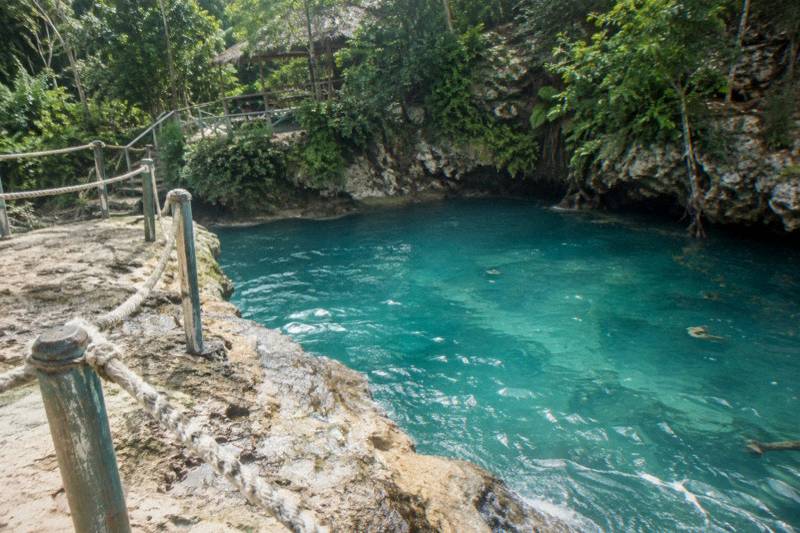
Is The Blue Hole In Jamaica Safe? Life Jackets, Guides And Slippery Rock
The Blue Hole near Ocho Rios is a natural river gorge with cliff jumps, rope swings and slippery limestone, run by an attraction licensed by Jamaica's tourism authorities, whose on-site guides are trained lifeguards. Here is what the official rules say, what equipment is provided, and what the tours actually include.
Short answer
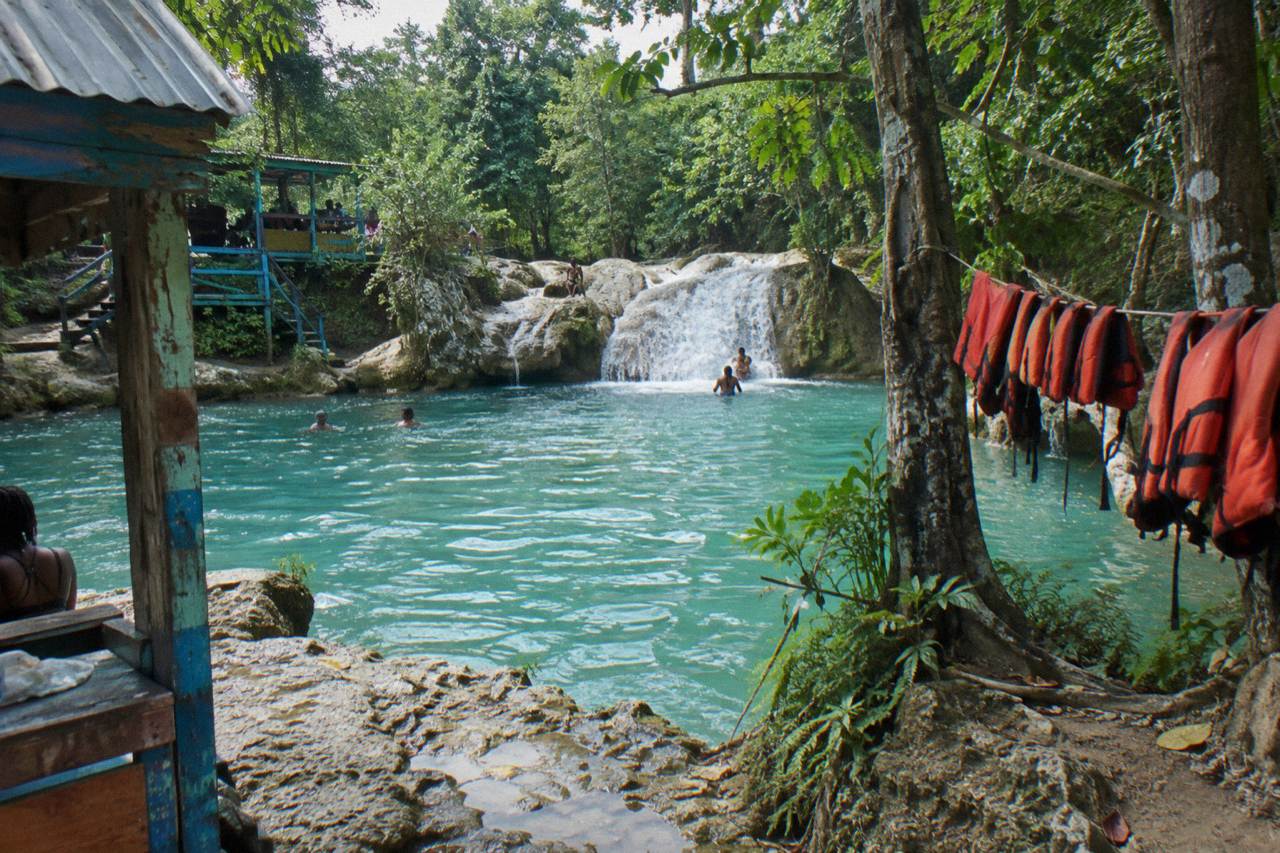
The Blue Hole at Island Gully Falls is a licensed attraction with on-site guides who are trained lifeguards, complimentary life jackets, required water shoes and posted rules against jumping from undesignated areas. The real hazards are slippery wet rock and high water after rain, when operators may close or reschedule. A guided tour is the standard way families visit.
Rain, wet limestone and river current are the three things that shape every safety question at the Blue Hole, the waterfall lagoon on Thatch Hill Road in St Ann, about 20 minutes from Ocho Rios town. The attraction is operated by Island Gully Falls under licensing from the Tourism Product Development Company, and its official pages set out rules, equipment and guide expectations in plain terms. This guide sets out what those rules are, what gear is provided and what is required, how tours differ in what they cover, and what changes after heavy rain, so cautious families can plan around facts rather than forum rumors. The short version: guided visits are the norm, life jackets are complimentary, water shoes are required, and jumping happens only where guides designate it. For a wider look at how official travel advice, entry rules and tourist-area conditions fit into planning a trip, see our guide to whether Jamaica is safe for American visitors right now.
Is The Blue Hole In Jamaica Safe To Visit?
No natural swimming site comes with a guarantee, and the Blue Hole is a river gorge with current, wet rock and jumps, so no honest writer hands out a safety verdict. What can be said is factual: the attraction is licensed, its guides are trained lifeguards, life jackets are complimentary, water shoes are required and posted rules prohibit jumping from undesignated areas. Those are unusually concrete provisions for a natural site.
The official safety guideline from the attraction's own site is a single direct sentence: "Listen to your guide and do not jump from undesignated areas." Around that sit the practical provisions. Life jackets are complimentary for on-property use, water shoes are available on-site in your size for purchase, and the guides, in the attraction's own words, "each are trained lifeguards." The site is featured by the Jamaica Tourist Board and licensed by TPDCo, which matters because an attraction carrying that licensing operates under a tourism regulator rather than as an informal swimming hole. You can read the rules and facilities directly on the attraction's official site.
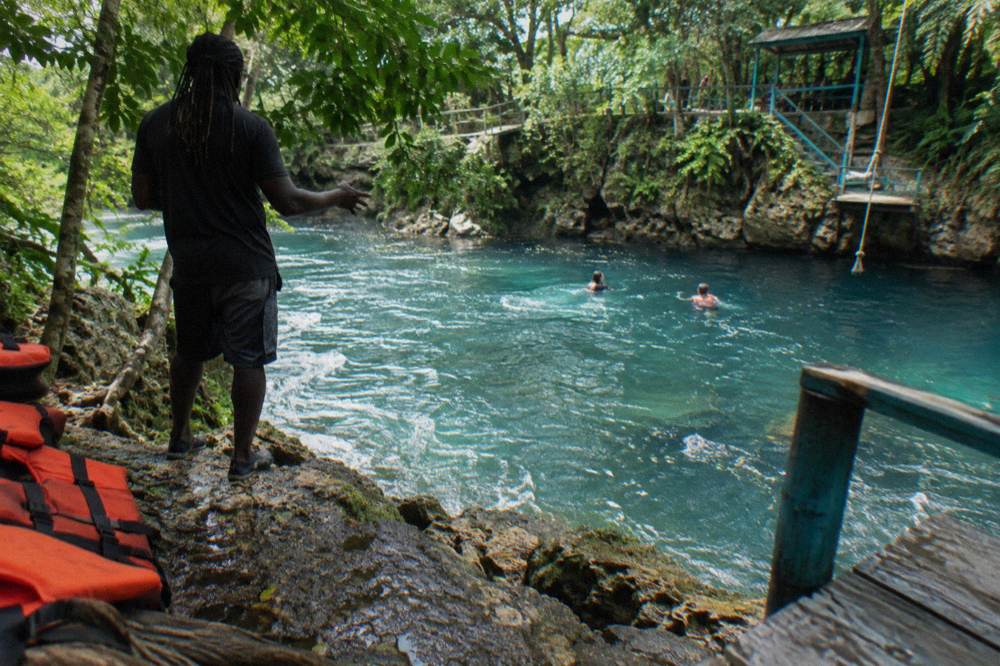
What the first page of search results tends to skip is the reason those rules exist. The terrain is uneven, wet limestone, and the rocks around the pools are slippery even on dry days. Independent travel writers who cover the site repeatedly make the same three points: wear closed-toe shoes with grip, follow the guide's path rather than picking your own, and keep valuables on the bus or in a locker rather than taking them into the water. Those habits, plus the guide, are what the safety system actually rests on.
For most visitors the guide is not an optional extra. The attraction's own material emphasizes letting "our passionate locals lead the way," and tour listings either include an on-site guide in the entry or strongly recommend one. A listing like Blue Hole and Dunn's River Falls Tour builds the guide into the day, which is why it is this site's featured trip for cautious families: one booking covers transport, both entry fees and the guiding at both stops.
Are Life Jackets Included At The Blue Hole?
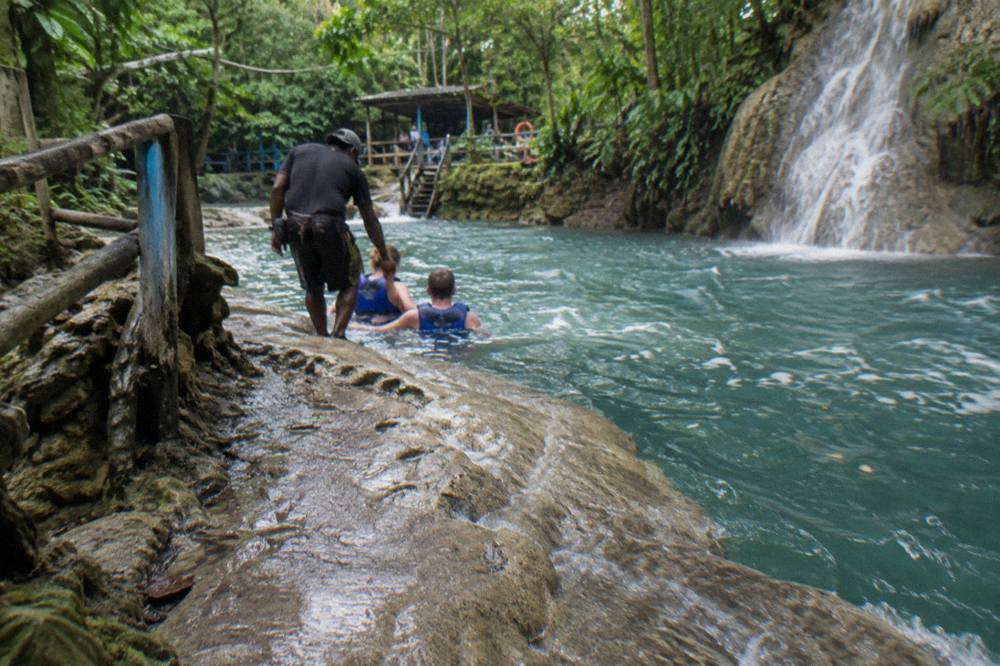
Yes. The official facility list includes complimentary life jackets for on-property use, and the admission-only ticket sold as a listing on this site includes life vests and an in-person English-speaking guide in its stated inclusions. Jackets are for use at the attraction, not to take home, and guides assist non-swimmers in the shallower areas according to multiple tour accounts.
The equipment picture comes straight from the attraction's amenities list: showers, private changing rooms, restrooms, lockers for rent, water shoes available for purchase, snack bars and, on the safety side, complimentary life jackets plus guides trained as lifeguards. That means a family arriving with swimwear and a towel does not need to buy or pack flotation. Children who are not confident swimmers should be in a jacket the whole time, and the on-site guides are used to sizing them. Since flotation is already covered at the gate, the remaining question is what the swim itself is like, and our guide to swimming in the Blue Hole lagoon walks through exactly what to expect.
What tours add on top varies by listing, which is worth checking before you book rather than at the gate. The table below compares what the lineup's Ocho Rios listings state about entry, guiding and the inclusions around them.
| Listing | From price | Entry ticket included | Guide stated |
|---|---|---|---|
| Blue Hole Tour from Ocho Rios (private) | from $80 per person | not included | driver/guide listed |
| Blue Hole only-from Ocho Rios (private) | from $40 per person, entry extra | not included | transport and guide listed |
| Ocho Rios Blue Hole and Dunn's River Falls Tour | from $89.72 per person | both entries included | air-conditioned vehicle, admissions listed |
| Original Blue Hole Admission Fee Ticket | from $25 per person | entry included | life vests and in-person English guide listed |
The admission-only ticket is exactly what it says: you travel to the Blue Hole yourself, no hotel pickup, and the listed inclusions are the entry, the life vests, the taxes and the in-person guide. It is a ticket, not a tour, and it suits visitors already based in Ocho Rios with their own transport.
For travelers who want the waterfall and the famous climb in one guided day, the shared Ocho Rios Blue Hole and Dunn's River Falls Tour is the lineup's strongest option on review volume, 4.9 from 443 reviews, from $89.72 per person with both admission fees included. Its private counterpart from Montego Bay, 4.9 from 447 reviews from $115 per person, covers the same two stops for guests based further west, though entry fees are extra on that one.
Between those two, the selection above spans the formats most families weigh: the shared combo with entries included, a private Ocho Rios Blue Hole tour at from $80 per person, and a shorter 2.5-hour shared highlights trip from from $60 per person.
Why Are Water Shoes Required At The Blue Hole?
The official rule is that water shoes are required, and the attraction sells them on-site in your size. The reason is the terrain: the pools and paths are wet, uneven limestone that stays slippery even in dry weather, and every independent account of the site names shoe grip as the single most practical safety item a visitor controls.
Closed-toe shoes with real grip are the recommendation that appears again and again across travel accounts of the site, with the same warning attached: flip-flops and bare feet raise slip risk on wet rock substantially. Because the rule is official, the attraction treats shoes as part of access rather than advice. If you do not own water shoes, buying them on-site is the fallback, though prices at attractions are rarely the cheapest, so bringing a pair from home is the practical move.
The same logic applies at Dunn's River Falls, the stop most Blue Hole combos add. Press-reported guidance for the falls says water shoes with good grip are required or recommended for the climb, available to buy or rent there, with lockers around US$10 plus a refundable deposit. So a day combining both waterfalls doubles the case for proper shoes: one pair works for both stops. Visitors planning the full combo can read more in the Blue Hole and Dunn's River Falls tour guide.
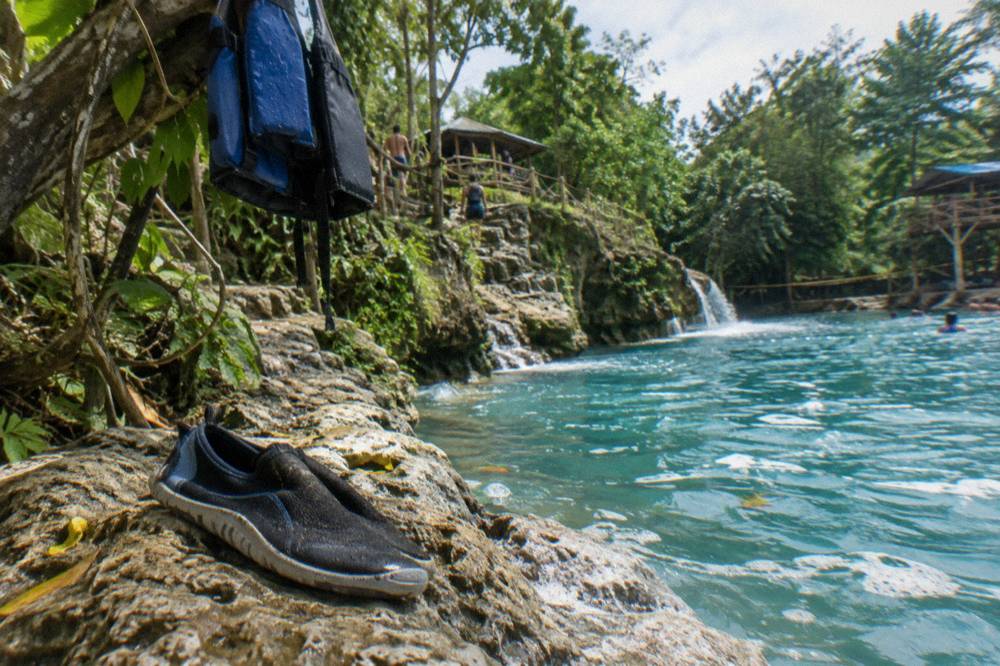
The wider packing list the official FAQ gives is short and sensible: swimwear, towels, water shoes, bug spray and sunscreen, a change of clothes, and cash or card. Our what to wear and bring guide expands that into a full checklist with the reasoning behind each item.
If the answer so far matches what you want, a booked guided day with entries included removes most of the decisions above in one step, and free cancellation is listed on the featured trip.
Are The Blue Hole Guides Trained Lifeguards?
Yes, in the attraction's own words: the guides "each are trained lifeguards." That claim sits on both official sites for Island Gully Falls and the Blue Hole, and it is the operational core of how the site manages water activities, with guides leading groups, pointing out safe jump points and assisting swimmers rather than a posted lifeguard chair supervising the whole pool. If you're curious how far down those safe jump points actually go, our breakdown of the real height of the Blue Hole jump covers what the guides themselves will tell you before you leap.
It is worth being precise about what that means. This is not a swimming pool with a lifeguard on a raised chair watching a defined zone. It is a river attraction where supervision travels with the group: the guide leads the walk down, chooses where the group swims and jumps, and intervenes where someone is out of their depth. That is why the single official rule, listen to your guide and do not jump from undesignated areas, carries so much weight. The designated areas are the guide's call, made on the day, against the water conditions in front of them.
Tour operators layer their own staffing on top. Several lineup listings state a certified lifeguard accompanies the trip, for example the 6-hour Blue Hole, Dunn's River and Reggae Hill guided tour lists "experienced and certified life guard for your safety" among its inclusions, and the 7 to 9 hour lunch-and-cocktails version carries the same line plus a certified guide from pickup to drop-off. Those are listings whose text names the safeguard, which is the only basis on which this site reports it.
Tipping is the unglamorous footnote to guiding in Jamaica. Operators and travel sites commonly report tips for guides and drivers of about US$5 to 30 depending on service, and restaurants 15 to 20 percent. Reviews of Blue Hole and Dunn's River trips show guides do ask; treating it as a normal cost of a guided day is the realistic framing. For families weighing whether a guided day earns its price at all, our worth-it assessment works through the numbers.
What Happens At The Blue Hole When It Rains?
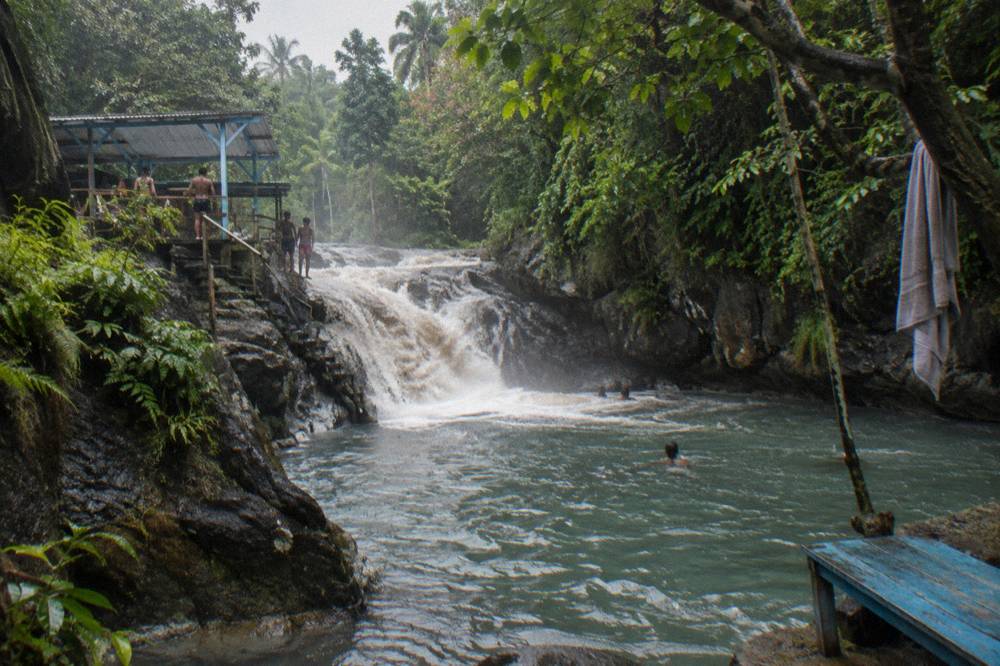
Rain raises the water level, lowers clarity and can close the site. Guest reviews from 2026 report the Blue Hole closed on high-water days with tours rescheduled, and operators may cancel or reroute for safety when the river is up. Dry, sunny weather is when the water reads clearest and most blue; after heavy rain it turns greener and murkier.
This is the fact most first-page articles skip and most families need. The Blue Hole is a river system, not a spring-fed basin with a fixed level, and the seasonal pattern matters when you pick a date. Ocho Rios is drier roughly December to April and wetter May to November, with October typically among the wettest months, around 16 rainy days against February's 6. Within the wet season, a dry week can still give a clear day; the risk is the day after a heavy fall, when the river runs high and brown. The rest of the planning pages sit on Blue Hole Tours Jamaica.
The practical consequences are three. First, clarity: the famous turquoise shows best in dry, sunny conditions, and operators and travel writers agree on that pattern. Second, access: reviews describe closures on high-water days, handled by rescheduling rather than refunds-lost, and the free cancellation listed across this site's lineup means a weather-driven change is not usually a money-lost event. Third, footing: wet-season rock is more treacherous underfoot even when the site is open, which loops straight back to the water shoe rule.
| Condition | Effect on the water | What visitors report |
|---|---|---|
| Dry, sunny days | clearest turquoise color, lower level | best swimming and photos |
| After heavy rain | higher level, reduced clarity, greener tone | murkier pools, stronger current |
| High-water days | site may close or reschedule | tours rerouted or moved to another date |

Which Blue Hole Tour Is Safest For Families With Kids?
No tour can be ranked "safest," but the listings that reduce a family's decisions are the ones with entries, guiding and transport bundled: the shared Ocho Rios combo from $89.72 per person with both admission fees included, the private Blue Hole Tour from Ocho Rios at from $80, and the shorter shared highlights trip from from $60. Each states hotel pickup and free cancellation on its listing.
For a cautious family the differences are practical. Private tours, like Blue Hole Tour from Ocho Rios, 4.8 from 214 reviews, mean your own group and a driver-guide, which suits younger children who want to move at their own pace or leave early. Shared tours cost less and pair well with older kids who enjoy the group energy, and the 2.5-hour Secret Waterfall and Highlights version, 4.5 from 28 reviews, is short enough that a swim, a fruit tasting and a drive covers the morning without exhausting anyone. Combo days stretch to 4.5 hours or more, so judge the total duration against your children's stamina rather than the price alone.
The private option above is the one to check first if control over pace matters more than price: from $80 per person, hotel pickup and drop-off in an air-conditioned vehicle, a 3-hour window and a 4.8 rating from 214 reviews.
Age and ability questions have no published answer beyond the gate's child ticket cutoff of 10 years and under, so treat jumping as strictly optional and age-appropriate. The rope swings and cliff jumps are available, the official guidance leaves where and whether to the guide's designation, and non-jumpers can stay in the lagoon with a jacket on. The lineup has no stated age minimums, weight limits or medical policies; those are questions for the listing or the operator before booking.
The short shared trip above, from $60 per person with entry, taxes, transport, bottled water and a taste of in-season Jamaican fruit listed as included, is the gentlest introduction on the lineup for mixed-age groups.
What Are The Official Rules And Entry Fees At The Blue Hole?
The gate fees are US$25 for a non-resident adult and US$15 for a child of 10 or under, residents pay 1,500 Jamaican dollars adult and 1,000 child, and the site opens Sunday to Friday, 8:30 AM to 4:30 PM. Saturday hours are not published, so check before you go. Rules: follow the guide, jump only where designated, wear water shoes.
The fee structure is worth a close read because tours treat it differently. Some listings include the entry, others list it as an extra on top of the from-price, and one private combo states Blue Hole entry as US$20 per person charged by that operator alongside its tour price. The official gate figures are the ones in the table; when a listing says "entry not included," add the gate fee to your mental total before comparing prices.
| Visitor | Official gate fee |
|---|---|
| Non-resident adult | US$25 |
| Non-resident child (10 and under) | US$15 |
| Resident adult | JMD 1,500 |
| Resident child (10 and under) | JMD 1,000 |
The lineup's price spread for a family of four can therefore swing on entry handling alone. The from $40 per person private "Blue Hole only" listing excludes entry; the from $89.72 shared combo includes both Blue Hole and Dunn's River admissions; Dunn's River's own press-reported gate runs US$25 adult and US$17 for children 4 to 12. Full cost comparisons, including the how much it costs breakdown, spell out the arithmetic for each departure town.
Two final administrative points for US, UK and Canadian visitors: a valid passport is required, no visa is needed for stays up to 90 days, and every arriving passenger completes the free online C5 form through the official portal, avoiding third-party sites that charge for it. Details are in our Jamaica entry requirements guide. For current government travel guidance, check the official US State Department advisory page directly. Entry rules are on Visit Jamaica's official entry requirements page.
How Do You Plan A Low-Risk Day At The Blue Hole?
Book a guided tour with entry included, go in the dry season if your dates allow, arrive near opening to beat crowds, wear grippy water shoes, keep non-swimmers in complimentary life jackets, follow the guide's designated jump areas only, and leave valuables on the vehicle or in a rented locker. Free cancellation is listed across the lineup, so weather flexibility costs nothing extra.
Timing and crowd management are the two levers most visitors underuse. Cruise-ship days thicken the Dunn's River crowds in particular, and the standard advice across sources is early morning near opening or the later afternoon, mirroring what our best time to visit guide lays out month by month. For cruise passengers specifically, port pickup listings exist from Ocho Rios, Falmouth and Montego Bay, several with return-to-ship timing built in, which is the detail that matters when your ship sails at five.
Beyond the water, the on-property infrastructure handles the rest of a family day: showers, private changing rooms, restrooms, lockers for rent, snack bars and a souvenir shop, with professional photo packages available. None of that changes the core rules, it just makes a half-day with children easier to run.
For families who want water time with almost no jumping culture at all, the Blue Hole and bamboo rafting combo above, 4.9 from 214 reviews from $95 per person with all fees and taxes included, splits the day between the waterfall and a calm raft float on the Rio Nuevo.
Whichever you choose, the safety fundamentals stay the same, and they are the attraction's own: guide-led, jacketed, shod in grip, and jumping only where the lifeguard-trained guide says.
Common Questions About Blue Hole Safety
Is The Blue Hole In Jamaica Safe?
No natural water site carries a guarantee, and this site does not issue safety verdicts. The facts: the attraction is licensed, its guides are trained lifeguards, life jackets are complimentary, water shoes are required, and jumping is allowed only from designated areas. Rain can close the site on high-water days, with tours rescheduled.
Are Life Jackets Included At The Blue Hole?
Yes, the official amenities list includes complimentary life jackets for on-property use, and the admission-only ticket listing includes life vests plus an in-person English-speaking guide. Jackets are for use at the attraction.
Do You Have To Wear Water Shoes At The Blue Hole?
Yes, water shoes are required by the attraction and are sold on-site in your size. The terrain is wet, uneven limestone that stays slippery even in dry weather, and grip is the most practical safety item a visitor controls.
Are The Guides At The Blue Hole Trained Lifeguards?
Yes. Both official sites for the attraction state that the guides each are trained lifeguards. Supervision travels with your group rather than from a fixed lifeguard chair, which is why the posted rule is to listen to your guide and never jump from undesignated areas.
Can The Blue Hole Close After Rain?
Yes. Guest reviews report the Blue Hole closed on high-water days with tours rescheduled, and operators may cancel or reroute for safety. Dry, sunny weather gives the clearest, bluest water; heavy rain raises the level and lowers clarity.
What Is The Official Entry Fee At The Blue Hole?
US$25 for a non-resident adult and US$15 for a non-resident child aged 10 or under. Residents pay 1,500 Jamaican dollars adult and 1,000 child. Some tours include entry in the price, others list it as an extra, so check the listing before comparing.