Blue Hole Jamaica Photos: Best Spots, Light And Waterproof Gear
The Blue Hole near Ocho Rios is one of the most photographed spots in Jamaica, and the difference between a good frame and a great one usually comes down to timing, light and keeping your camera dry.
Short answer
The clearest water and best light at the Blue Hole come in the morning, soon after the 8:30 AM opening, before cruise crowds arrive. Shoot from the limestone ledges above the main pool, the rope swing platform and the forest trail. Entry is US$25 for adult non-residents, and a waterproof phone case is the single most useful piece of gear.
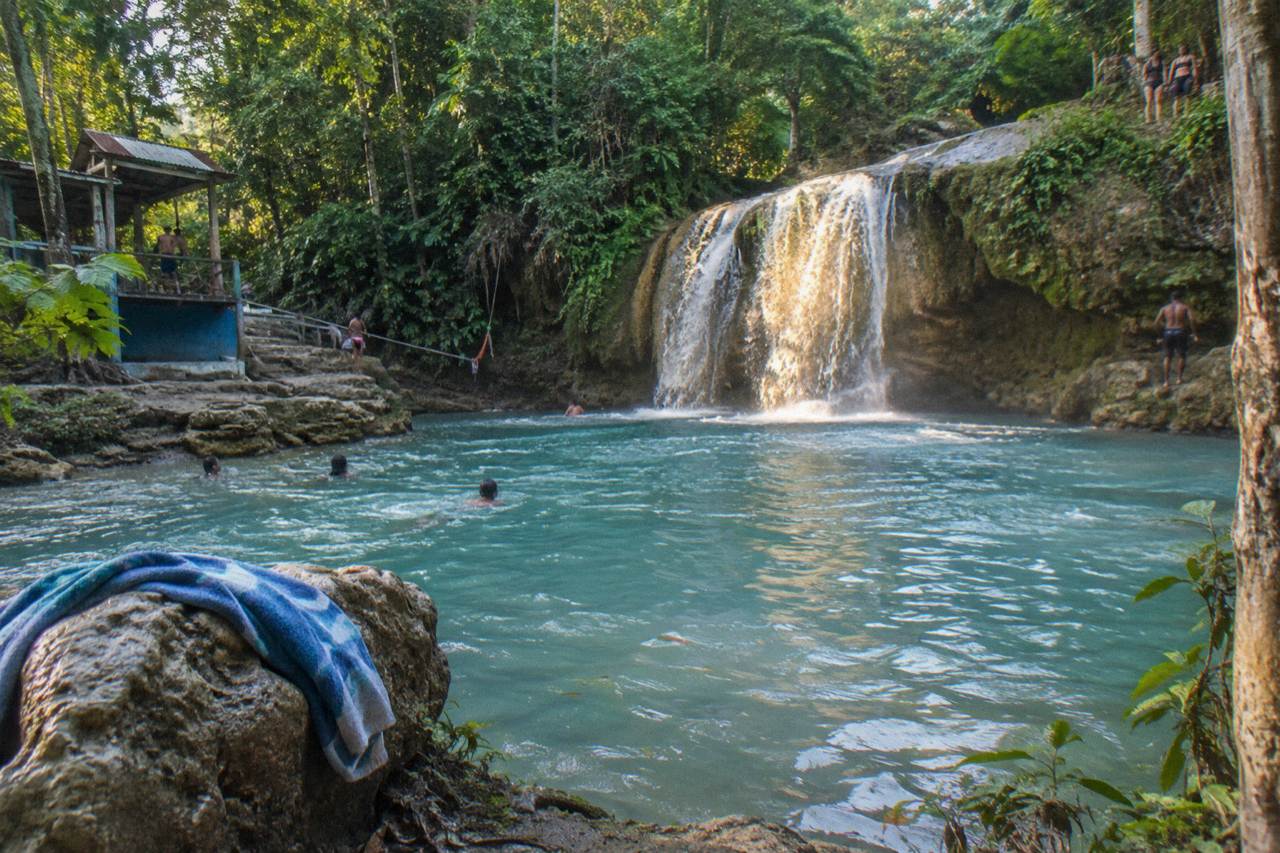
The Blue Hole near Ocho Rios, officially Island Gully Falls, is a cascade of turquoise limestone pools at the end of Thatch Hill Road in St Ann, about a 20 minute drive from Ocho Rios town. Its water colour and jungle walls make it one of the most photographed freshwater spots in Jamaica. Getting the shot, though, depends on things most visitors never plan for: which hour you arrive, what the last rainfall did to the water, and whether your phone survives the rope swing. This guide covers where to stand, when the light is clearest, what gear to bring and how the on-site photo service works, with a nod to the tours that give photographers the most time at the pools. The Blue Hole Tours Jamaica comparison pages cover booking in depth; this one is about the pictures.
Where Are The Best Photo Spots At The Blue Hole?
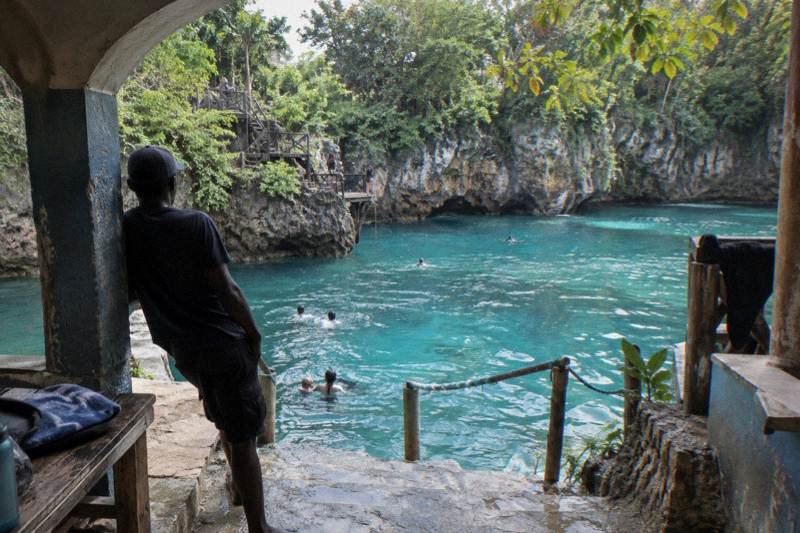
The strongest Blue Hole Jamaica photos come from three places: the limestone ledges above the main pool, the rope swing platform, and the forest trail that looks back down the cascade. Each gives a different angle, and the official site describes all three, lagoon swimming, cliff jumps, rope swings and forest trails, as the core experience.
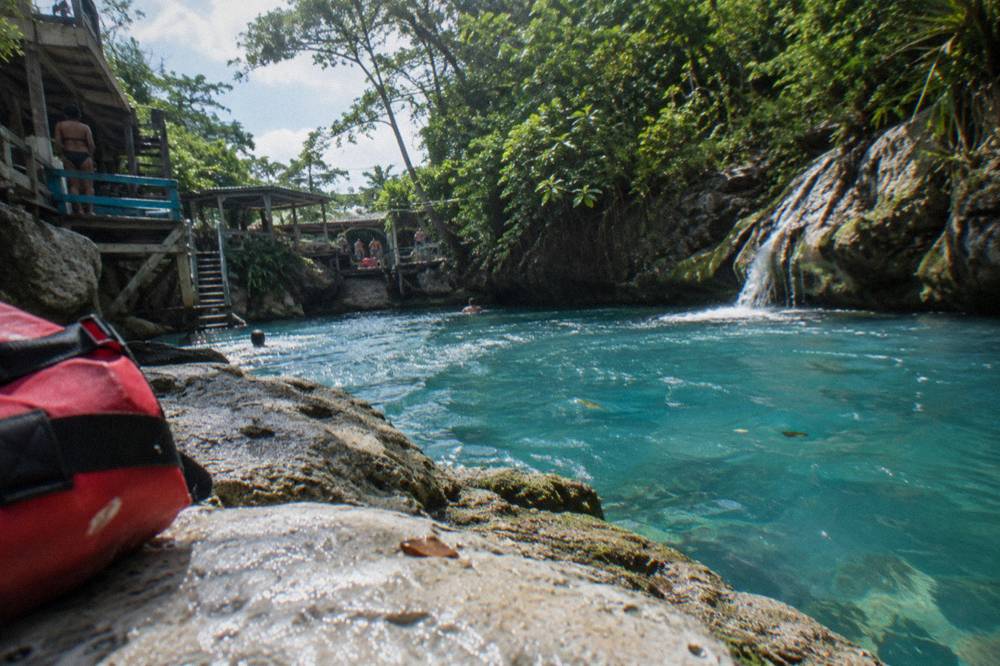
The main pool is the classic frame. Limestone shelves ring the water on several sides, and from the higher ledges you can shoot straight down into the blue, which is where that saturated colour reads best. The official Island Gully Falls pages describe "natural lagoon/turquoise pools fed by mountain springs", and that turquoise is strongest when you shoot from above rather than at water level, where the surface glare flattens it.
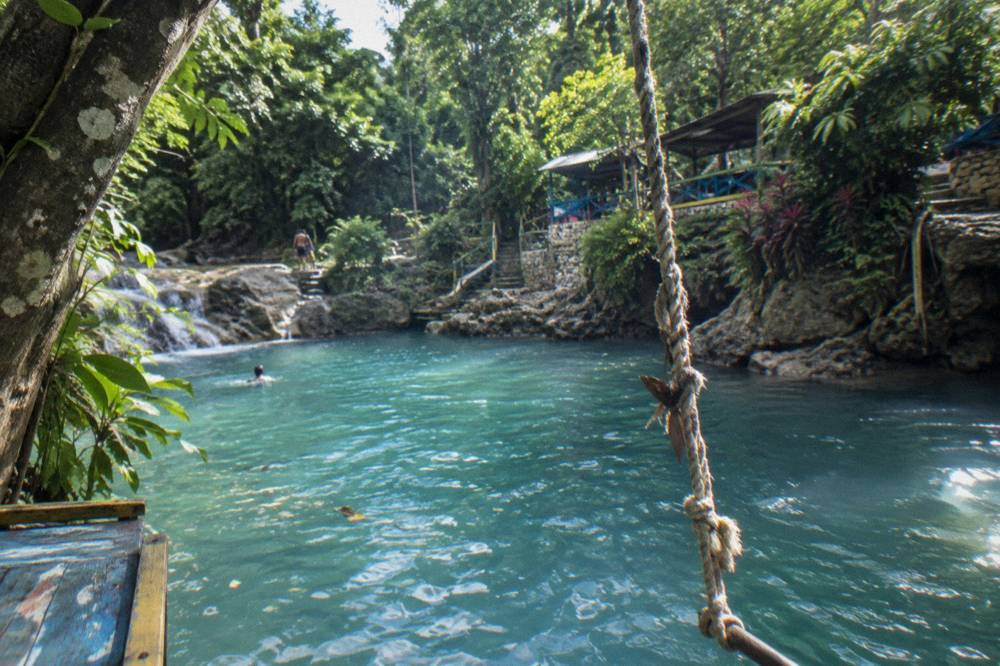
The rope swing platform is the action spot. The swing launches from the jungle canopy, so a fast burst mode from the opposite bank catches the arc against the green wall. Guests report the swing is one of the busiest corners of the site, so patience and a morning arrival both help. The cliff jump points, at designated spots only, give a second action frame, though the site's own safety guideline is blunt: "Listen to your guide and do not jump from undesignated areas." Photograph from the bank, not from an edge you were told to avoid.
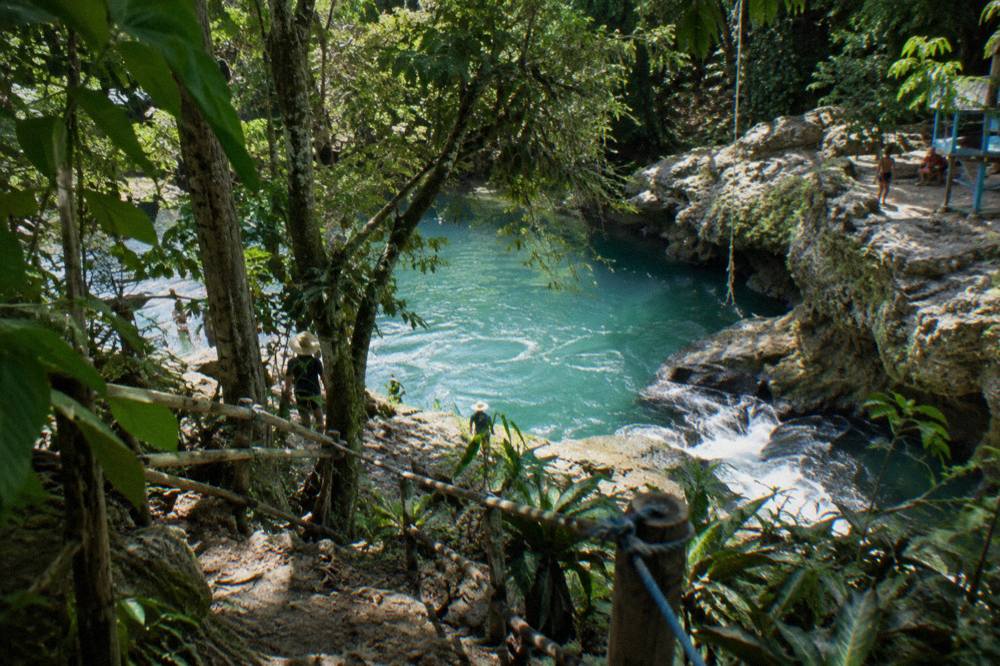
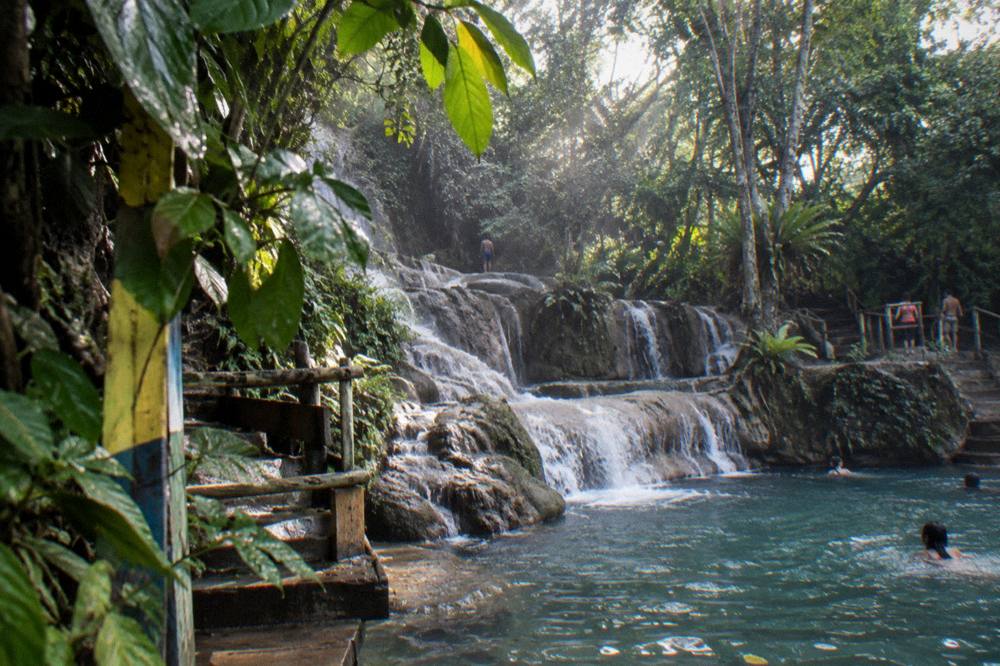
The forest trail is the underrated angle. It climbs past the cascade and looks back down over the pools, and because it is shaded for most of the day, it works in midday light when the ledges are too harsh. The changing rooms, showers and snack bar cluster near the entrance, so the walk out is also where you will shoot people shots rather than landscape ones.
What Time Of Day Gives The Clearest Water And Best Light?
Arrive close to the 8:30 AM opening. The Blue Hole is open Sunday to Friday, 8:30 AM to 4:30 PM, and the first two hours give the calmest water, the fewest people in frame and the most even light before the midday sun hits the canyon. Early afternoon, after about 2 PM, is the second best window.
The opening hours come from the official Island Gully Falls site, and they matter for photographers more than for swimmers. Cruise excursion groups tend to land mid to late morning, and the pools are small enough that a single bus changes every frame. A private morning tour such as the Blue Hole tour from Ocho Rios, from $80 per person with hotel pickup listed and a 4.8 rating from 214 reviews, is built exactly for this: you control the pace and can wait out a crowd at one pool while shooting another. Check availability
Light in the canyon is tricky. The walls are high and the sun reaches the main pool at an angle for much of the day, which produces harsh highlights on wet rock and deep shade behind. Morning light arrives lower and softer, and before the cruise buses it also arrives over undisturbed water. Midday is when the trail and the down-angle ledge shots work instead, since both sit in shade. Shoot raw if your phone allows it, because the contrast between white limestone and dark green jungle is extreme.

How Does Rain Change The Water Colour In Photos?
Rain raises the water level and lowers clarity, so the pools photograph bluest in dry, sunny weather and can turn greener or murkier after heavy rain. Operators report the Blue Hole can close on high-water days with tours rescheduled, so a dry spell before your visit is the single biggest factor in how blue your photos look.
This is the part of Blue Hole Jamaica photos nobody controls. The seasonal pattern around Ocho Rios runs drier from roughly December to April and wetter from May through November, with October typically among the wettest months. Within any week, though, what matters is the last 24 to 48 hours of rain. Reviews from 2026 describe visits where recent runoff left the water less clear than the postcard shots, and the same reviews describe days of vivid blue after dry weather. Once you've pinned down a dry window, our Blue Hole location and directions guide covers the drive times and opening hours.
If you are on the island for a week, keep your Blue Hole day flexible and slot it after two or three clear days. Most listings on this site carry free cancellation, and tours that include Blue Hole entry bundle the gate fee, so moving a booking costs nothing if the policy allows. If rain falls on the day, the shaded trail shots and the jungle canopy frames still work; it is the wide blue pool shot that suffers.
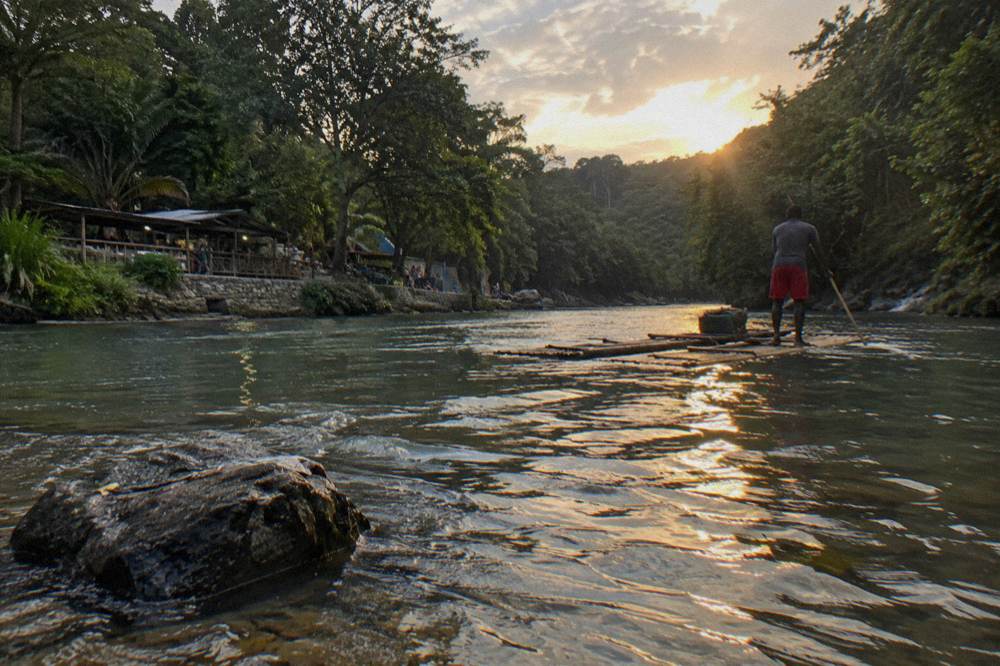
For a different kind of water shot entirely, some visitors pair the falls with a raft: the Blue Hole and bamboo rafting combo, from $95 per person and rated 4.9 from 214 reviews, adds a slow river stretch that photographs calmly after the chaos of the pools.
What Waterproof Gear Should You Bring For Blue Hole Photos?
A waterproof phone case or pouch is the one piece of gear that matters, followed by closed-toe water shoes, which the site requires anyway. The official amenities list includes lockers for rent, so a dry bag left on shore is an option too, but a case lets you shoot from the water, which is where half the best frames are.
The site's own guidance sets the baseline. Water shoes are required and sold on-site in your size, and the surfaces are wet limestone, which is as slippery as it looks. For camera gear, the practical split is simple: phones go in a sealed pouch with a lanyard, and anything larger stays on shore. The official facilities list covers showers, private changing rooms, restrooms, lockers for rent and a souvenir shop, so there is a place to leave a bag, but the site does not promise camera storage.
A few approaches that work well:
| Gear | Best for | Where it lives |
|---|---|---|
| Sealed phone pouch with lanyard | Burst shots from the water, rope swing follow-focus | Around your neck, under your life jacket |
| Compact camera in a dry bag | Ledge and trail shots | On shore in a rented locker |
| Action camera with float grip | Cliff jump and swing video | Wrist-mounted or handed to a guide on the bank |
| Microfibre towel | Lens and housing wipe | Dry bag; humid air fogs lenses fast |
One honest note on the water itself: no official depth or temperature figure is published, and none is needed for photography. What matters is that the pools are swimmable with a complimentary life jacket, that guides assist in the water, and that the water reads cool and refreshing in guest accounts. Do not overpack. A pouch, shoes and a towel cover almost every Blue Hole shot. If you plan to get in the water rather than only photograph it, our full guide to swimming in the Blue Hole covers the life jacket rules, water shoes, and what the lifeguard guides handle.
Should You Buy The Official Photo Packages?
The site sells professional photography packages alongside its snack bars and souvenir shop, and they suit anyone who wants people shots from the water without risking a phone. If your goal is landscape and water-colour frames, your own gear does the job; if you want the jump and swing captured mid-air, the on-site photographers are already positioned for it.
The packages are listed on the official Island Gully Falls amenities page, and they sit inside the same operation as the lockers and the gift shop, which means the photographers work the site daily and know the light. Pricing is on the listing and at the site, so check on arrival. The alternative is asking your tour guide: reviews regularly describe guides shooting guests' phones from the best bank positions, and guides on the lineup listings are described as accompanying groups throughout.
If you would rather outsource the whole morning, the sightseeing option is worth a look. The Ocho Rios Blue Hole and sightseeing tour, from $103.55 per person, includes round-trip transport, the entry ticket, a driver-guide and an air-conditioned vehicle, which covers the logistics while you focus on the frames. Check availability
Which Tours Give Photographers The Most Time At The Pools?
Private tours give the most shooting time because the schedule bends around your group, and the lineup's private Blue Hole options from Ocho Rios run 3 hours from $40 to $80 per person. Shared tours are cheaper and still allow photo stops, but the group moves when the group moves.
The clearest comparison is within the Blue Hole only family:
| Tour | Type | Duration | From price | Entry ticket |
|---|---|---|---|---|
| Blue Hole only, from Ocho Rios | Private | 3 hours | $40 per person | Not included, paid at the gate |
| Blue Hole Tour from Ocho Rios | Private | 3 hours | $80 per person | Not included |
| From Ocho Rios: Blue Hole Secret Waterfall & Highlights | Shared | 2.5 hours | $60 per person | Included in fees |
| Original Blue Hole admission ticket | Ticket only | 1 to 4 hours | $25 per person | Included |
For photographers, that table reads one way: the admission ticket plus your own taxi is maximum freedom, but no guide, and the official site emphasizes its local guides for both safety and the best experience. A private 3 hour tour is the middle path, with a guide who will hold your phone and wait while you bracket a shot. Long combos trade pool time for variety, so treat them as a second-day option if the Blue Hole frames are the priority.
A full-day alternative that still protects morning light: the most reviewed listing on this site, the Montego Bay Blue Hole and Dunn's River Falls tour, from $140 per person, 4.6 from 1,037 reviews, 8 hours, which pairs the falls with Secret Falls, Dunn's River and a jerk lunch stop that photographs almost as well as the water does.
What Should You Shoot Besides The Water?
Shoot the people, the limestone textures and the jerk stops. The lineup's longer tours add Dunn's River Falls, Secret Falls, horseback riding and river tubing, and every one of those stops is a different photographic subject: a 180 foot terraced climb, a quiet bamboo raft, a beach-side lunch with entertainment.
The Blue Hole itself supplies the texture shots most visitors miss. Wet limestone in raking morning light, the ropes and swings against the canopy, and the small details, lockers, snack bars, changing rooms, tell the story of a working attraction rather than a postcard. The official site describes forest trails, and those trails are where the layered jungle shots live.
Beyond the pools, the combos broaden the album:
| Stop | What it adds to the album | Found on |
|---|---|---|
| Dunn's River Falls | Terraced 55 m limestone cascade, human-chain climb | The Dunn's River combo listings |
| Secret Falls | Quieter cascades and blue pools, fewer people | Combo day trips from Montego Bay and Ocho Rios |
| Bamboo rafting at Rio Nuevo | Slow water, hand-built raft, riverbank greenery | The rafting combos from Ocho Rios |
| Horseback riding and tubing | Action frames on land and water | The Triple Action Pack combo |
The Triple Action Pack combo, from $165 per person and rated 4.8 from 772 reviews over 5 hours, is the variety pick: Blue Hole, horseback riding and river tubing with all attraction fees and round-trip transport included. It will not give you a long, slow morning at the pools, but it fills a card.
What Should Cruise Passengers Know About Blue Hole Photos?
Cruise passengers should book a tour with pier pickup and a return guarantee, accept midday light rather than morning light, and plan the drive honestly: from the Ocho Rios pier the Blue Hole is roughly half an hour or a little more away, while Falmouth is about 82 km and 1 h 30 to 1 h 40 each way.
Cruise-pier drive times vary across sources, so treat them as ranges. From Falmouth, the dedicated Falmouth cruise port guide on this site covers the realistic timings; from Ocho Rios, the port sits about 20 minutes from town and the falls another short leg beyond. The Falmouth listing on this lineup, from $140 per person, 4.9 from 115 reviews, picks cruise passengers up at the port 30 minutes after the ship docks and includes all fees and taxes.
Photographically, cruise timing means you arrive with the crowds, so work the angles that survive people: the down-angle ledge shot, the trail shots, and burst-mode action frames where bodies in the water actually help the composition. Practical cruise planning, timing and ports, is covered in the Blue Hole cruise excursion guide; the photography advice is simply to shoot wide, shoot high and let the turquoise carry the frame.
What Camera Settings Work For Blue Water And Jungle Light?
Shoot raw, expose for the highlights on wet limestone, and underexpose slightly, about a third to two thirds of a stop, to keep the blue saturated. Burst mode for the swing and jumps, and the widest lens you have for the pool from the ledges. In deep shade on the trail, raise ISO rather than slowing the shutter, because foliage moves.
The technical problem at the Blue Hole is dynamic range. White limestone in sun blows out about two stops before the jungle shade crushes to black, so any auto mode will pick one and lose the other. Exposing for the highlights keeps the rock detail, and the shadow lift on modern phones recovers the green. For the water itself, polarisation is the trick that matters most: a polarising filter on a compact camera, or the polariser effect absent on most phones, removes surface glare and lets the true blue read through. Without one, shoot from above at a steep angle, which minimises reflection naturally.
For people shots, the site's own rules shape the frame. Jump only from designated areas, wear the life jacket, and let the guide position you. A jacket in every frame is the honest record of how this place actually works, and it photographs better than a badly timed mid-air panic. Guest reviews describe the water as cool and refreshing, and that is the feeling to chase in the people shots: the first-hit-the-water face.
How Do You Keep Photos Safe Around Water, Guides And Tips?
Keep valuables in a rented locker or dry bag rather than in the water, let guides hold or position your phone only when you ask, and carry small US bills for tips. Operators and travel sites commonly report guide and driver tips of about US$5 to 30 depending on service, and USD is widely accepted at Jamaican attractions.
The locker rental is listed among the official amenities, and guest guidance is consistent across sources: leave what you cannot afford to wet on the bus or in a locker, and take only a sealed pouch into the pools. Guides are standard at the site, supervise groups, point out safe spots and assist with jumps and swimming, and many will shoot your phone from the bank on request. That service sits inside Jamaica's tipping culture; carrying small bills makes it easy to thank people properly on the spot.
For the photos themselves, back up before you swim. Upload to cloud storage over the site's signal when you get a moment, because a sealed pouch is a precaution, not a guarantee. The full kit and clothing rundown, including water shoes, towels and dry bags, is covered in the what-to-wear and bring guide elsewhere on this site.
The Blue Hole's official pages, including the Island Gully Falls site, list the amenities, fees and rules referenced here, and Jamaica's official entry requirements for US, UK and Canadian visitors are on the Visit Jamaica entry requirements page, worth a check before any photography-heavy trip where a lost document day would hurt.
Good Blue Hole photography is mostly good Blue Hole planning. Arrive early or late, watch the rain, seal the phone, shoot from above, and pick a tour whose pace matches the shots you want. The water does the rest.
Common Questions About Blue Hole Jamaica Photos
Where Are The Best Photo Spots At The Blue Hole?
The limestone ledges above the main pool give the classic down-angle blue shot, the rope swing platform gives the action frame, and the forest trail gives shaded views back over the cascade. All three are described on the official site as part of the core experience.
What Time Of Day Is The Water Clearest For Photos?
The first two hours after the 8:30 AM opening usually give the calmest, clearest water before cruise crowds arrive. Early afternoon after about 2 PM is the second quiet window. Clarity also depends on recent rain: dry, sunny spells read bluest.
Can You Take A Phone Into The Blue Hole?
Only in a sealed waterproof pouch or case. The site rents lockers and lists water shoes, life jackets and changing facilities among its amenities, so gear can be left on shore, but a lanyard pouch is what lets you shoot from the water.
Does Rain Ruin Blue Hole Photos?
Heavy rain raises the water level and lowers clarity, and operators report the site can close on high-water days with tours rescheduled. After dry weather the pools photograph in their strongest turquoise, so keep your date flexible if you can.
Are Official Photo Packages Available At The Blue Hole?
Yes, professional photography packages are listed among the official amenities, alongside the snack bars, souvenir shop and lockers. Pricing is set at the site, and many tour guides will also shoot photos for guests on request.
Which Tour Gives Photographers The Most Time At The Pools?
Private tours give the most flexibility, and the private Blue Hole options from Ocho Rios run 3 hours from $40 to $80 per person. The admission-only ticket, from $25, offers the most freedom of all but no guide or transport.